


Description
GE IS420UCSBH4A Technical Specifications:
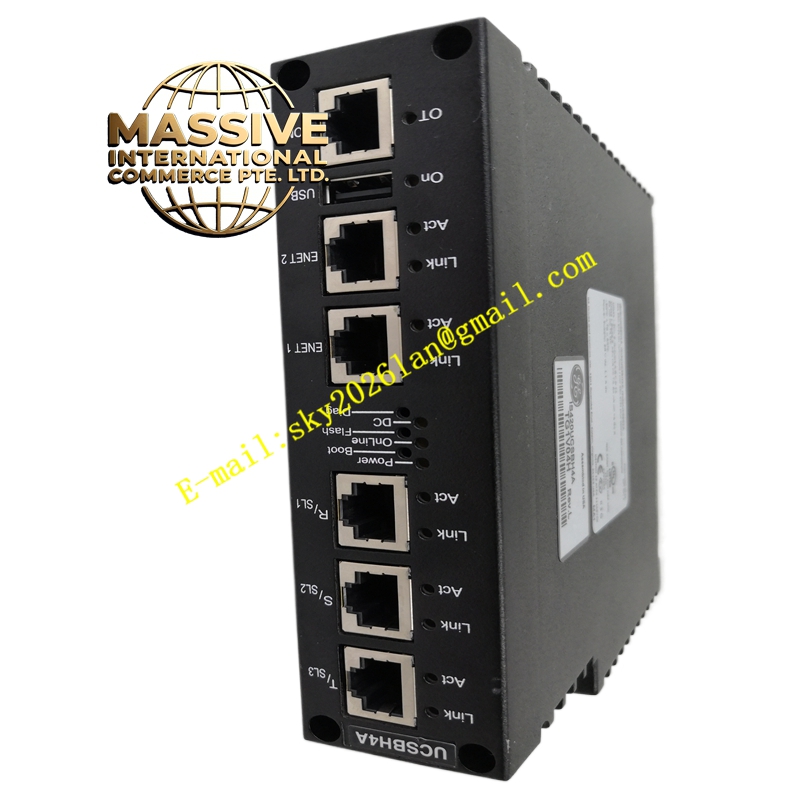
- Port Count: Expanded serial port configuration (typically 4 or more).
- Protocol Support: RS-232, RS-485, RS-422, and enhanced Modbus RTU/ASCII.
- Baud Rates: Extended range up to 230.4K baud.
- Buffer Size: Increased onboard memory for high-throughput applications.
- Isolation: Enhanced galvanic isolation with higher dielectric rating.
Functional Features:
- High-Density Connectivity: Supports more serial devices per board, reducing rack space.
- Enhanced Processing: Faster microprocessor for handling multiple high-speed serial streams.
- Advanced Diagnostics: Per-port error counters, timeout detection, and automatic retry mechanisms.
- Protocol Translation: Built-in support for protocol conversion between different serial standards.
Application Scenarios:
- High-density serial device integration in power plants.
- Multi-drop RS-485 networks with numerous field instruments.
- Protocol gateways between legacy and modern control systems.
- Data acquisition systems requiring multiple serial channels.
Performance Parameters:
- Throughput: Higher aggregate bandwidth for simultaneous multi-port communication.
- Latency: Reduced processing delay for time-critical applications.
- Reliability: Enhanced ESD and surge protection on all serial ports.
Material Composition & Structural Characteristics:
- PCB: High-density multi-layer board with optimized signal routing.
- Connectors: Industrial-grade connectors with locking mechanisms.
- Thermal Management: Enhanced heat dissipation for high-port-count operation.
- Labeling: Clear port identification and status indicators.
Working Principle: The IS420UCSBH4A operates similarly to the UCSBH1A but with enhanced processing capabilities. It manages multiple serial ports simultaneously, using dedicated hardware UARTs and DMA (Direct Memory Access) for efficient data transfer. The increased buffer size prevents data loss during high-traffic periods, while advanced error handling ensures reliable communication in noisy industrial environments.
Installation Requirements:
- Slot Compatibility: Verify compatibility with the target controller platform.
- Cable Management: Plan cable routing carefully due to increased port density.
- Power Budget: Ensure the backplane can supply adequate power for all active ports.
- Software Configuration: Configure each port independently with appropriate parameters.
Usage Precautions:
- Port Loading: Monitor bus loading to prevent communication bottlenecks.
- Grounding: Implement proper grounding for all connected devices.
- Firmware Updates: Keep firmware current to benefit from bug fixes and enhancements.
- Spare Parts: Maintain spare modules due to the critical nature of multi-port communication.