



Description
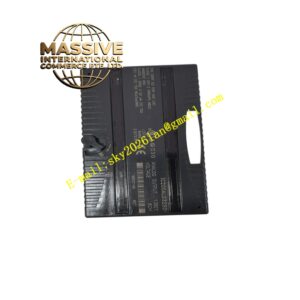
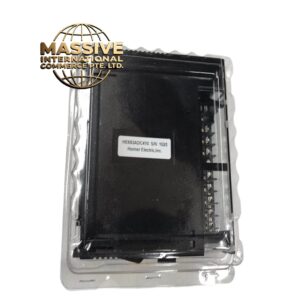
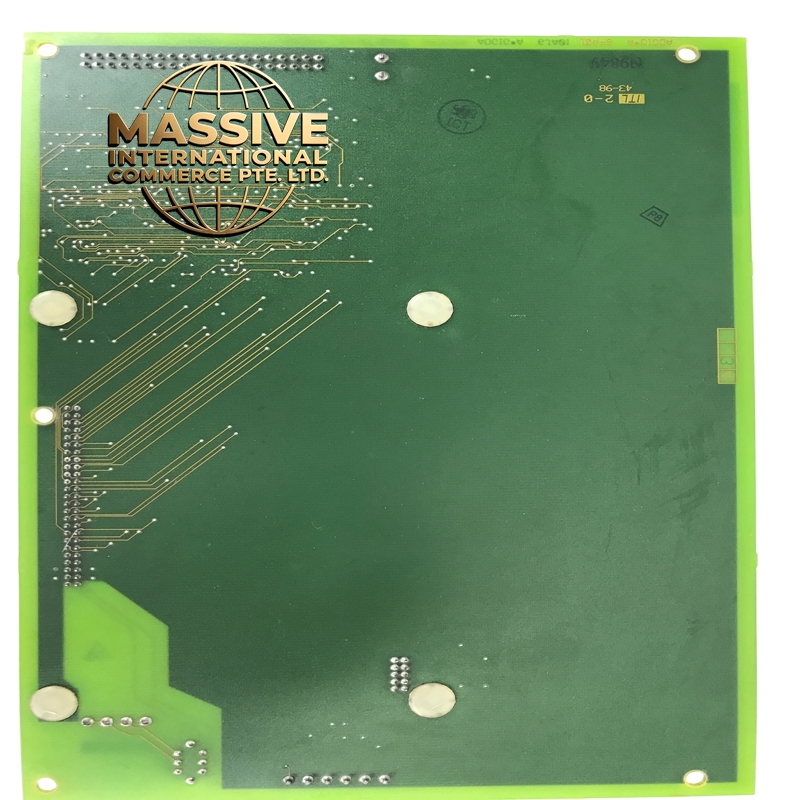
GE DS200ADGIH1AAA
- Technical Specifications:
- Channels: 16 single-ended or 8 differential analog input channels
- Input Types Supported: 4–20 mA, 0–20 mA, 0–10 VDC, Thermocouple Types J, K, T, E, N, S, R, B; RTD Types Pt100, Pt1000, Cu50, Ni120
- A/D Resolution: 16-bit sigma-delta converter with programmable oversampling
- Sampling Rate: 10 samples per second per channel (aggregate up to 160 samples/second across all channels)
- HART Support: Full HART 7 protocol compliant; supports HART multidrop with up to 2 HART devices per channel (4 devices total on the module)
- Isolation: 500 VDC channel-to-channel isolation; 500 VDC channel-to-logic isolation via optical isolators
- Cold Junction Compensation: Built-in automatic cold junction compensation for all thermocouple types with ±0.5°C accuracy
- Accuracy: ±0.05% of span for 4–20 mA and 0–10 VDC inputs; ±0.5°C for thermocouple inputs; ±0.15°C for inputs
- Burnout Detection: Automatic detection of open thermocouple or RTD circuits; configurable burnout current of 1 mA or 3.5 mA
- Diagnostics: Per-channel status LEDs on front panel; self-test executed on every power-up; fault codes logged in the controller’s diagnostic buffer
- Functional Features:
- HART Multidrop: Up to 2 HART-enabled smart transmitters per channel can be addressed individually, allowing configuration, calibration, and diagnostic data retrieval without interrupting the 4–20 mA analog signal
- Programmable Filter: Each channel has a user-configurable digital filter with selectable time constants (0.1 s, 0.5 s, 1.0 s, 2.0 s) to reject noise
- Per-Channel Configuration: Every channel can be independently set to a different input type (e.g., channel 1 = 4–20 mA, channel 2 = Type K thermocouple, channel 3 = Pt100 RTD)
- Fail-Safe Behavior: Configurable per-channel fail-to-zero, fail-to-last, or fail-to-midscale when signal is lost
- Live Zero Detection: Detects when a 4–20 mA signal drops below 3.8 mA and flags a fault
- Application Scenarios:
- Power Plants: Steam drum level measurement, superheater outlet temperature, feedwater flow rate, condenser hotwell level, turbine bearing temperature
- Chemical Processing: Reactor temperature profiling, catalyst bed temperature, acid concentration monitoring, distillation column pressure
- Pulp & Paper: Dryer cylinder temperature, stock consistency, white water flow, broke pulp level
- Oil Refineries: Crude oil preheat temperature, catalytic cracker temperature, hydrogen purity analysis
- Pharmaceutical: Bioreactor temperature, clean-in-place flow verification, sterile filter differential pressure
- Performance Parameters:
- Operating Temperature: -20°C to 70°C (wide temperature range for harsh environments)
- Storage Temperature: -40°C to 85°C
- Relative Humidity: 5% to 95% non-condensing
- Power Consumption: 4.5 W typical, 6.0 W maximum
- MTBF: Greater than 150,000 hours at 40°C ambient
- EMC Compliance: IEC 61131-2 (EMC for industrial process measurement and control)
- Material & Structure:
- Module Size: Mark V/VI standard format, approximately 170 mm × 100 mm × 30 mm
- Connector: 50-pin high-density connector on the bottom (backplane side); 34-pin field terminal block on the top (field wiring side)
- PCB: 6-layer FR-4 with conformal coating (acrylic-based) for humidity and chemical resistance
- Enclosure: Zinc-plated cold-rolled steel chassis with full EMI shielding can; front panel is black anodized aluminum
- Weight: Approximately 350 grams
- Front Panel: 16 green LEDs (one per channel) indicating signal present; 2 amber LEDs for module fault and HART activity
- Working Principle:
- Each channel contains a dedicated signal conditioning ASIC (Application-Specific Integrated Circuit) that performs amplification, filtering, linearization, and A/D conversion. For thermocouple inputs, the ASIC reads the millivolt signal, applies cold junction compensation using an on-board precision temperature sensor, and converts to engineering units. For inputs, a precision constant-current source excites the RTD and the ASIC measures the resulting voltage drop. The HART modem uses frequency-shift keying (FSK) at 1200 baud (logic 1) and 2200 baud (logic 0) superimposed on the 4–20 mA signal. Digital HART data is separated by a band-pass filter and demodulated by a dedicated HART decoder IC. All data is presented to the Mark V/VI or Mark VIe CPU via the system backplane bus.
- Installation Requirements:
- Rack Position: Install in a Mark V/VI or Mark VI/VIe I/O rack; the module occupies one standard I/O slot
- Backplane Connection: Ensure the backplane connector is fully seated; a loose connection will cause intermittent communication errors
- Wiring for HART: Use shielded twisted-pair cable (minimum 22 AWG); maximum cable length for HART communication is 1500 meters; a 250-ohm HART termination resistor is required at the control system end (the module includes an internal termination that can be enabled via software)
- Thermocouple Wiring: Use thermocouple extension wire of the same type as the sensor (e.g., Type K extension wire for Type K thermocouple); do not use copper wire for thermocouple runs
- RTD Wiring: Use 3-wire or 4-wire configuration to eliminate lead resistance errors; the module supports both
- Usage Notes:
- Do not mix thermocouple types on the same channel group; each channel group (8 channels) must use a single thermocouple type
- HART Device Addressing: Each HART device on the module must have a unique address (1–15); duplicate addresses will cause communication conflicts
- Maximum HART Devices: 4 HART devices total per module (2 per channel); exceeding this limit will cause HART communication failures
- Calibration: Use the Mark V/VI or Mark VIe Calibrate utility in the control system software (ToolboxST or CIMPLICITY); calibration data is stored in the module’s on-board EEPROM and survives power cycles
- Burnout Current: Set the burnout current to 1 mA for 2-wire transmitters (to avoid false readings) or 3.5 mA for 3-wire transmitters (to ensure reliable burnout detection)