


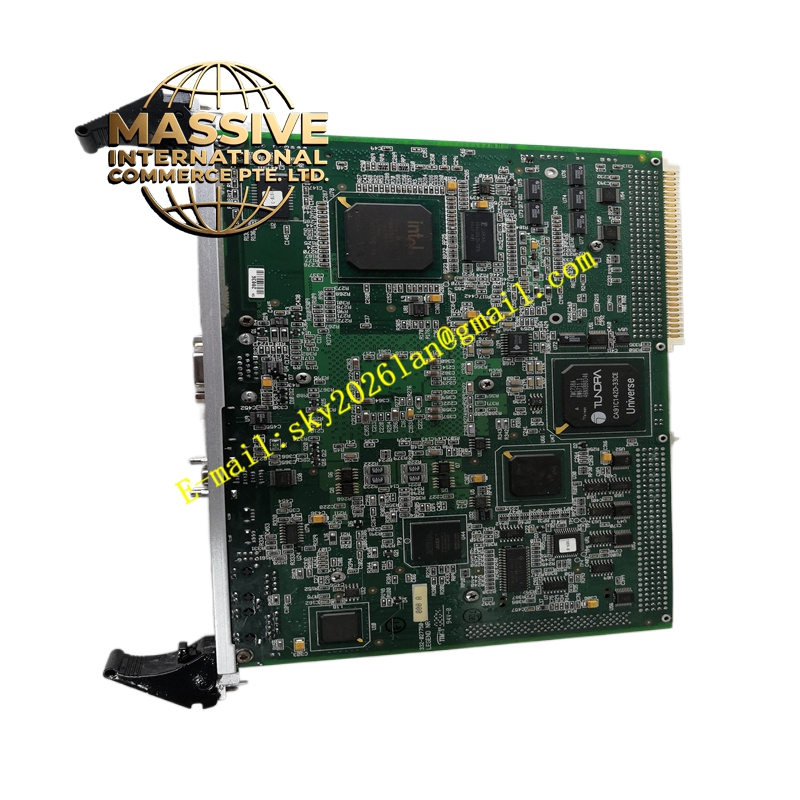
Description
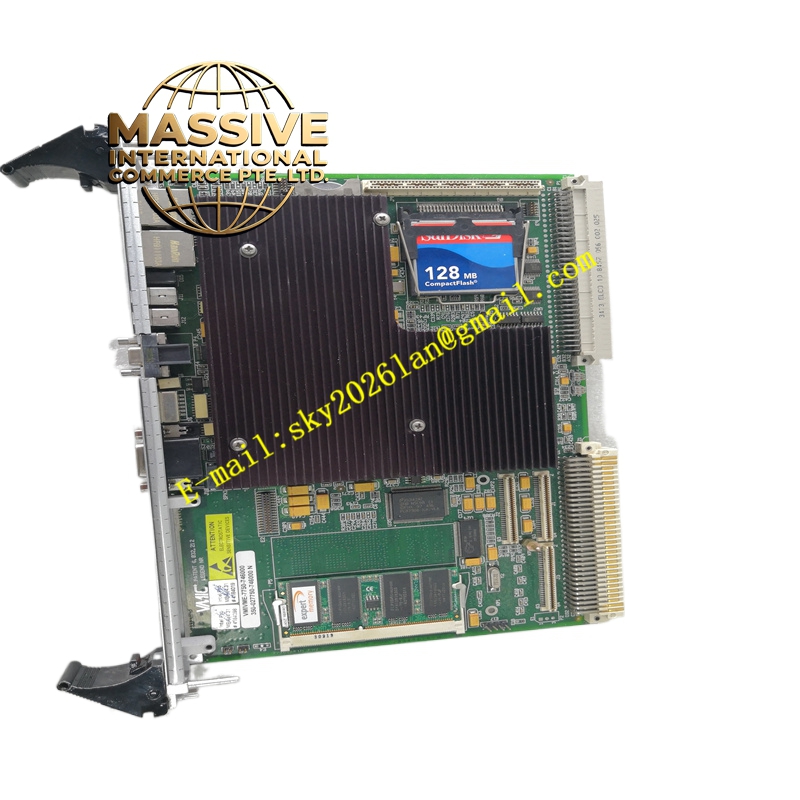
GE VMIVME-7750-746000 Technical Specifications:
- Processor: Intel Pentium III processor running at up to 1.26 GHz with a 133 MHz front-side bus.
- Memory: Supports up to 512 MB of PC133 SDRAM via a single SODIMM slot, plus 32 KB of non-volatile SRAM.
- Storage: Integrated IDE interface supporting up to a 1 GB bootable Flashdisk.
- Graphics: Built-in AGP SVGA controller with 4 MB of external synchronous DRAM video memory.
- Network: Dual Ethernet controllers (Intel 82559 + ICH2 integrated) supporting 10/100BaseTX.
- Serial I/O: Two 16550-compatible serial ports supporting baud rates up to 1.5 Mbps.
Functional Features:
- VMEbus Compliance: Fully compliant with VME64 specification Rev C.1, supporting A32/A24 addressing and D32/BLT32 data transfers.
- PCI-to-VME Bridging: Features a transparent Universe IIB PCI-to-VME bridge, allowing the board to act as a system controller or peripheral CPU.
- PMC Expansion: Supports one standard 5V PCI Mezzanine Card (PMC) for additional I/O or specialized processing.
- OS Compatibility: Supports multiple operating systems including Windows XP/2000, VxWorks, QNX, Linux, and Solaris.
- Watchdog Timer: Software-programmable watchdog timer capable of triggering system reset, NMI, or SYSFAIL signals.
Application Scenarios:
- Real-time industrial control and process automation.
- Factory automation and intelligent networked PLC controllers.
- Data acquisition and automated test equipment (ATE).
- Telecommunications and instrumentation platforms.
Performance Parameters:
- Bus Architecture: 32-bit address bus and 64-bit data bus with MMX technology support.
- Display Resolution: Maximum resolution of 1600×1200 at 256 colors in single-view mode.
- Boot Capabilities: Supports remote Ethernet booting via BootWare technology using TCP/IP, NetWare, or RPL protocols.
Material Composition & Structural Characteristics:
- Form Factor: Standard 6U Eurocard with passive cooling design for enhanced reliability.
- Connectors: Standard VME P1 connector and VME64 P2 connector for high-bandwidth backplane communication.
- Interfaces: Front-panel PS/2 keyboard/mouse ports, SVGA port, and Ethernet RJ45 jacks.
Working Principle: The board utilizes the Pentium III processor to execute complex control algorithms and real-time tasks. The Intel 815E chipset manages high-speed data flow between the CPU, memory, and PCI bus. The Universe IIB bridge translates VMEbus transactions into PCI transactions, enabling seamless communication with VME peripherals. Data is processed and routed through the dual Ethernet ports or serial interfaces to external networks and devices.
Installation Requirements:
- Slot Configuration: Insert into a standard 6U VME chassis in either a system controller or peripheral slot.
- Seating: Align the board with the chassis guides and use the ejector handles to firmly seat the backplane connectors.
- Jumper Configuration: Configure jumpers for system controller/peripheral mode, interrupt routing, and memory mapping before installation.
Usage Precautions:
- Electrostatic Discharge: Always use proper ESD grounding when handling the board to prevent damage to the Pentium III processor and SDRAM.
- Thermal Management: Ensure the chassis provides adequate airflow across the passive heat sinks to prevent thermal throttling.
- Memory Compatibility: Verify that the installed SODIMM is a standard PC133 SDRAM module to ensure system stability.