


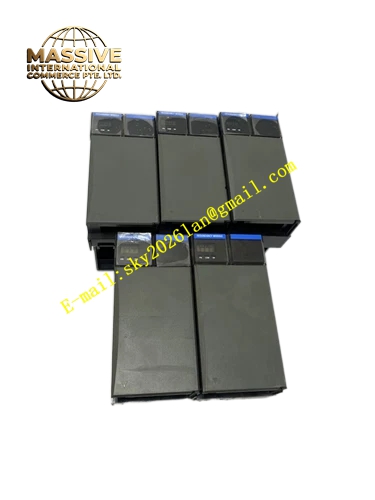
Description
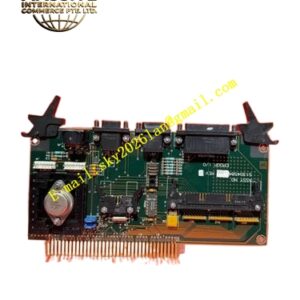
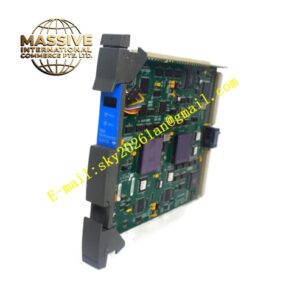
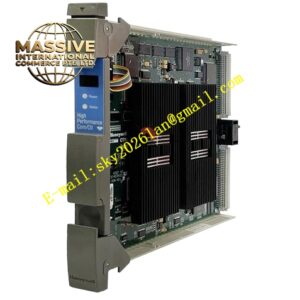
HONEYWELL TK-PRR021
Technical Specifications:
- Brand: Honeywell
- Model: TK-PRR021
- Part Number: 51309288-475 / 51309288-275
- Product Type: Redundancy Module
- Compatible System: Honeywell C200 / C200E Controller
- Chassis Slots Used: 2 slots
- Dimensions: 12.7 mm x 101.6 mm x 127 mm
- Weight: 0.5 kg
Power Consumption:
- 24V DC: 0.090 Amperes
- 5V DC: 1.000 Amperes
- 3.3V DC: 0.750 Amperes
- 1.2V DC: 0.007 Amperes
Functional Features:
- C200 Redundancy Support: Enables redundant configuration for C200 controllers
- Dual Slot Design: Occupies two chassis slots for redundancy implementation
- Low Current Consumption: Efficient power usage across multiple voltage rails
- Compact and Lightweight: Space-saving design suitable for control cabinet installation
- Deterministic Control: Works with C200’s CEE for precise control execution
- High Availability: Supports single or fully redundant configurations
- Safety-Critical Applications: Suitable for safety-related process control in petrochemical, oil and gas, and pharmaceutical industries
- Wide I/O Compatibility: Compatible with A Series I/O, Rail A I/O, Rail H I/O, and Process Manager I/O
- Communication Support: Supports Foundation Fieldbus, Profibus, DeviceNet, and HART protocols
Application Scenarios:
- Petrochemical process control systems
- Oil and gas production and refining
- Pharmaceutical batch processing
- Food and beverage manufacturing
- Power generation control systems
- Safety instrumented systems (SIS)
- Critical process control requiring high availability
- Legacy C200 system maintenance and upgrades
Performance Parameters:
- Redundancy Type: Controller redundancy for C200/C200E
- Control Execution: Deterministic CEE-based execution
- I/O Compatibility: A Series, Rail A, Rail H, Process Manager I/O
- Communication Protocols: Foundation Fieldbus, Profibus, DeviceNet, HART
- Response: Deterministic control execution timing
Material Composition:
- Industrial grade printed circuit board
- High-quality electronic components
- Precision connectors and terminals
- Durable housing materials
- Heat dissipation components
- Protective enclosure suitable for industrial environments
Structural Features:
- Compact modular design occupying 2 chassis slots
- Standard industrial form factor (12.7 x 101.6 x 127 mm)
- Lightweight construction (0.5 kg)
- Multiple power rail connections
- Status indicator LEDs
- Connection terminals for redundancy communication
- DIN rail or chassis mounting capability
- Ventilation for thermal management
Working Principle:
The TK-PRR021 redundancy module establishes a redundant communication and synchronization link between two controllers configured in a redundant pair. During normal operation, one controller acts as the primary (active) controller executing control strategies, while the other acts as the secondary (standby) controller. The redundancy module facilitates continuous state synchronization between the two controllers, ensuring that the standby controller maintains an identical process image and control state. When a fault is detected in the primary controller, the system automatically performs a bumpless transfer to the secondary controller, maintaining continuous process control without interruption. The module operates across multiple voltage rails (24V, 5V, 3.3V, and 1.2V) to support various internal functions and communication requirements.
Installation Requirements:
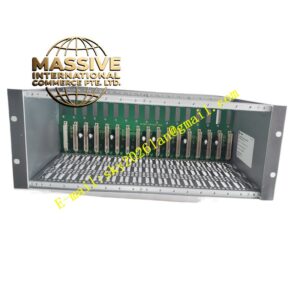
- Install in compatible Honeywell controller chassis
- Occupy two adjacent chassis slots as specified
- Ensure proper connection to both primary and secondary controllers
- Follow Honeywell redundancy configuration guidelines
- Maintain adequate ventilation around the module
- Ensure proper grounding of the chassis
- Connect redundancy communication cables as per wiring diagrams
- Install in a clean, dry environment within specified temperature range
Precautions for Use:
- Note that the series has been phased out since December 31, 2020; consider migration to C300 for new projects
- Installation should be performed by qualified technicians familiar with systems
- Verify redundancy configuration before placing system in service
- Regularly monitor redundancy status through system diagnostics
- Ensure both controllers in the redundant pair are properly synchronized
- Maintain firmware compatibility between redundant controllers
- Keep the module clean and free from dust and contamination
- Follow proper shutdown procedures before maintenance
- Verify power supply voltages are within specification
- Document redundancy configuration for troubleshooting reference