


Description
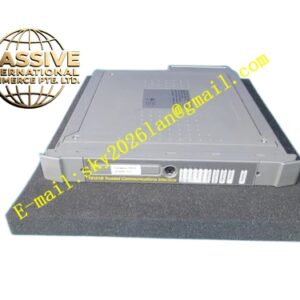
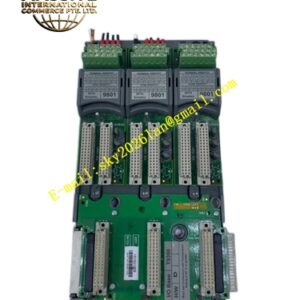
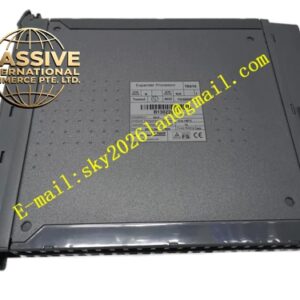
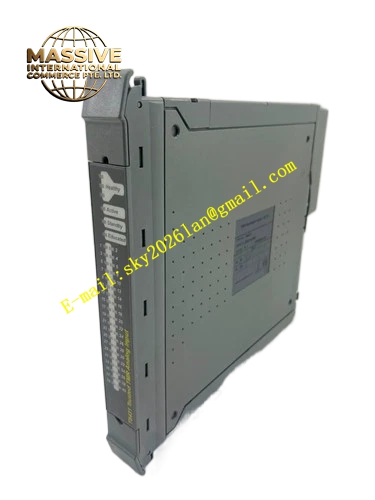
ICS Triplex 151661
Technical Specifications
| Parameter | Specification |
|---|---|
| Manufacturer | ICS Triplex (Rockwell Automation) |
| Product Type | TMR Main Processor Module |
| System Platform | Tricon / Tricon CX Safety System |
| Redundancy Architecture | Triple Modular Redundant (TMR) |
| Safety Integrity Level | SIL 3 (IEC 61508) |
| Processor | 32-bit RISC CPU |
| Programming Languages | FBD, LD, SFC, ST, IL (via Tristation 1131) |
| Communication Bus | TriBus (proprietary high-integrity TMR bus) |
| External Interfaces | RS-232, RS-485, Ethernet |
| Power Supply | 24 VDC |
| Power Consumption | 50 W |
| Operating Temperature | -40°C to +85°C |
| Storage Temperature | -35°C to +85°C |
| Dimensions | 300 mm × 200 mm × 100 mm |
| Weight | Approximately 10 kg |
| Protection Rating | IP20 |
Functional Features
- True TMR Architecture: Three fully independent channels simultaneously acquire, compute, and output data. A 2oo3 voting logic instantly isolates a faulty channel without causing system misoperation or shutdown.
- Hardware-Implemented Fault Tolerance (HIFT): Fault switching time is less than 1 millisecond, ensuring uninterrupted control performance.
- Comprehensive Self-Diagnostics: Built-in diagnostics monitor CPU, memory, power, clock, and communication bus with extremely high coverage. Diagnostic results display via front-panel LEDs or remote software.
- Non-Volatile Storage: Board-mounted non-volatile memory retains application programs and configuration data during power loss.
- Hot-Swap Capability: Supports online module replacement without system shutdown or program reloading.
- Online Program Change: Logic modifications are implemented without stopping the system.
- Wide Environmental Range: Operates reliably from -40°C to +85°C, eliminating the need for additional climate-controlled enclosures in extreme environments.
Application Scenarios
- Emergency Shutdown Systems (ESD) in oil & gas refineries
- Fire & Gas (F&G) detection and mitigation systems
- Burner Management Systems (BMS) for fired heaters and boilers
- Turbomachinery control and protection
- Nuclear safety protection systems
- High-pressure pipeline safety interlocks
- Offshore platform process control
Performance Parameters
- Fault Response: Hardware-based fault detection and isolation within sub-millisecond timeframes
- Diagnostic Coverage: Near-complete diagnostic coverage of all critical internal components
- Mean Time To Dangerous Failure: Exceeds 200 years under standard operating conditions
- System Throughput: High-speed parallel processing capability for complex safety logic
Material Composition
- Enclosure: Ruggedized industrial metal housing with corrosion-resistant finish
- Circuit Board: High-reliability multilayer PCB with conformal coating options
- Components: Industrial-grade and extended-temperature-rated semiconductors
- Connectors: High-reliability backplane and field connectors with gold-plated contacts
Structural Characteristics
- Rack-Mount Design: Standard Tricon chassis slot installation
- Front-Panel Indicators: Multi-color LEDs display RUN, HALT, ACTIVE, DIAG, and fault status
- Backplane Interface: Proprietary high-integrity TMR bus connection
- Mechanical Keying: Prevents incorrect module insertion
Working Principle
Three independent processor channels simultaneously execute identical safety application logic. Each channel reads input data, performs calculations, and generates outputs independently. The hardware voter compares the three output values and passes the majority result (2oo3) to the output modules. If one channel produces a discrepancy, the voter ignores that channel while the remaining two healthy channels maintain correct system operation. The faulty channel is automatically flagged for maintenance replacement.
Installation Requirements
- Install in a standard Tricon chassis with proper grounding
- Ensure adequate ventilation and heat dissipation in the control cabinet
- Use shielded cables for all communication and I/O connections
- Maintain proper clearances for module extraction and insertion
- Connect to a stable 24 VDC power source with appropriate overcurrent protection
Operating Precautions
- Verify all three processor channels are synchronized before placing the system in active control
- Monitor front-panel LEDs regularly for early fault indication
- Replace faulty modules promptly to restore full TMR redundancy
- Follow electrostatic discharge (ESD) procedures when handling modules
- Maintain environmental conditions within specified temperature and humidity ranges
- Perform regular diagnostic checks via Tristation 1131 software