


Description
ICS Triplex T3419
Technical Specifications
| Parameter | Specification |
|---|---|
| Manufacturer | ICS Triplex (Rockwell Automation) |
| Model Number | T3419 |
| System Platform | Regent Control System |
| Input Channels | 16 high-precision discrete input channels |
| Response Speed | ≤ 5 ms latency |
| Operating Voltage | 24 V DC |
| Current Consumption | ≤ 50 mA per channel |
| Communication Interface | MODBUS RTU / MODBUS TCP/IP |
| Protocol Compatibility | MODBUS |
| Operating Temperature | -20°C to +70°C (standard), -40°C to +70°C (extended) |
| Storage Temperature | -40°C to +85°C |
| Humidity Range | 0% to 95% RH (non-condensing) |
| Dimensions | 100 mm × 100 mm × 30 mm (compact configuration) or 3.2 cm × 26.5 cm × 36 cm (standard module) |
| Weight | 0.3 kg (compact) or 1.52 kg (standard module) |
| Network Protocol | MODBUS TCP/IP Compatible |
Functional Features
- 16 High-Precision Input Channels: Captures discrete states from a wide variety of field devices with high accuracy
- Advanced Noise Filtering: Each channel incorporates sophisticated filtering circuits to eliminate electrical noise and contact bounce
- Fast Response Time: Sub-5-millisecond latency ensures immediate system reaction to input changes
- MODBUS Communication: Native MODBUS RTU and MODBUS TCP/IP compatibility enables straightforward integration with industrial automation platforms
- High Environmental Resilience: Operates reliably from -20°C to +70°C, with extended versions rated for -40°C to +70°C
- Robust Mechanical Build: Engineered to withstand significant vibration and shock for continuous performance in power generation and petrochemical facilities
- High-Density Design: 16-channel configuration optimizes cabinet space in large-scale installations
Application Scenarios
- Safety Instrumented Systems (SIS) discrete input monitoring
- Oil and gas refinery critical variable monitoring
- Chemical processing plant switch status acquisition
- Power grid management contact status monitoring
- Large-scale industrial infrastructure protection
- Fire & Gas detector signal interfaces
- Emergency shutdown pushbutton monitoring
- Motor starter auxiliary contact feedback
Performance Parameters
- Input Response Latency: ≤ 5 ms from field change to logic state update
- Signal Integrity: Advanced filtering ensures clean logic states despite noisy field wiring
- Communication Speed: High-speed MODBUS data exchange for real-time monitoring
- Channel Density: 16 inputs per module provides cost-effective I/O aggregation
- Environmental Tolerance: Reliable operation across wide temperature and humidity ranges
Material Composition
- Enclosure: Ruggedized industrial metal housing with corrosion-resistant finish
- Circuit Board: Multilayer PCB with input conditioning and communication circuits
- Input Filters: RC and digital filtering components for noise suppression
- Communication Processor: Dedicated processor for MODBUS protocol handling
- Connectors: Industrial-grade terminal blocks and network connectors
Structural Characteristics
- Standard Regent Module Form Factor: Compatible with Regent controller chassis installation
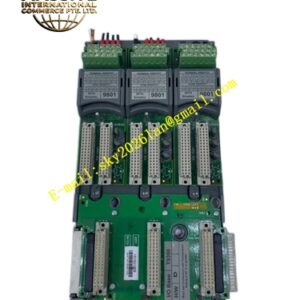
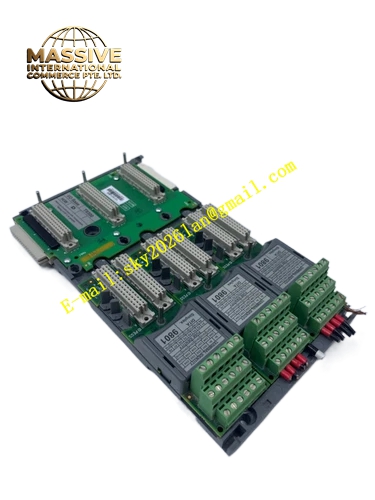
- Front-Panel Terminals: Accessible screw terminals for field device wiring
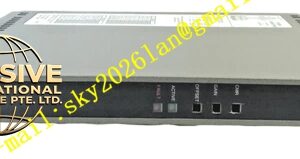
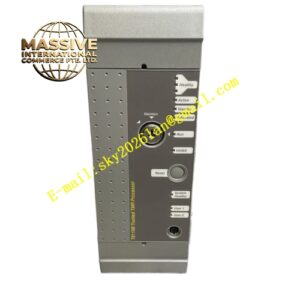
- Status LEDs: Channel status indicators and module health display on the front panel
- Network Port: Ethernet or RS485 connector for MODBUS communication
- Backplane Interface: Direct connection to the Regent system internal bus
Working Principle
The T3419 continuously scans all 16 input channels for state changes. Each channel receives a discrete signal from a field device and passes it through a multi-stage filtering circuit that removes electrical noise and contact bounce. The conditioned signal is read by the onboard processor, which packages the channel data into MODBUS registers for communication with the Regent controller or external SCADA systems. The module transmits state changes immediately upon detection, ensuring the control system responds to field events within the 5-millisecond latency specification.
Installation Requirements
- Install in a compatible Regent controller chassis slot
- Use shielded cables for field wiring in electrically noisy environments
- Configure MODBUS address and communication parameters via system software
- Ensure proper grounding of cable shields at one end only
- Connect field devices that provide compatible 24 VDC output signals
- Verify network termination for RS485 MODBUS RTU configurations
Operating Precautions
- Verify field device output voltage and current ratings match module specifications
- Monitor channel status LEDs for abnormal indication
- Maintain proper network termination resistors on MODBUS RTU networks
- Ensure Ethernet cable quality for MODBUS TCP/IP installations
- Perform periodic testing of input response times to verify performance
- Replace failed modules with identical part numbers to ensure compatibility
- Follow proper electrostatic discharge procedures during module handling