


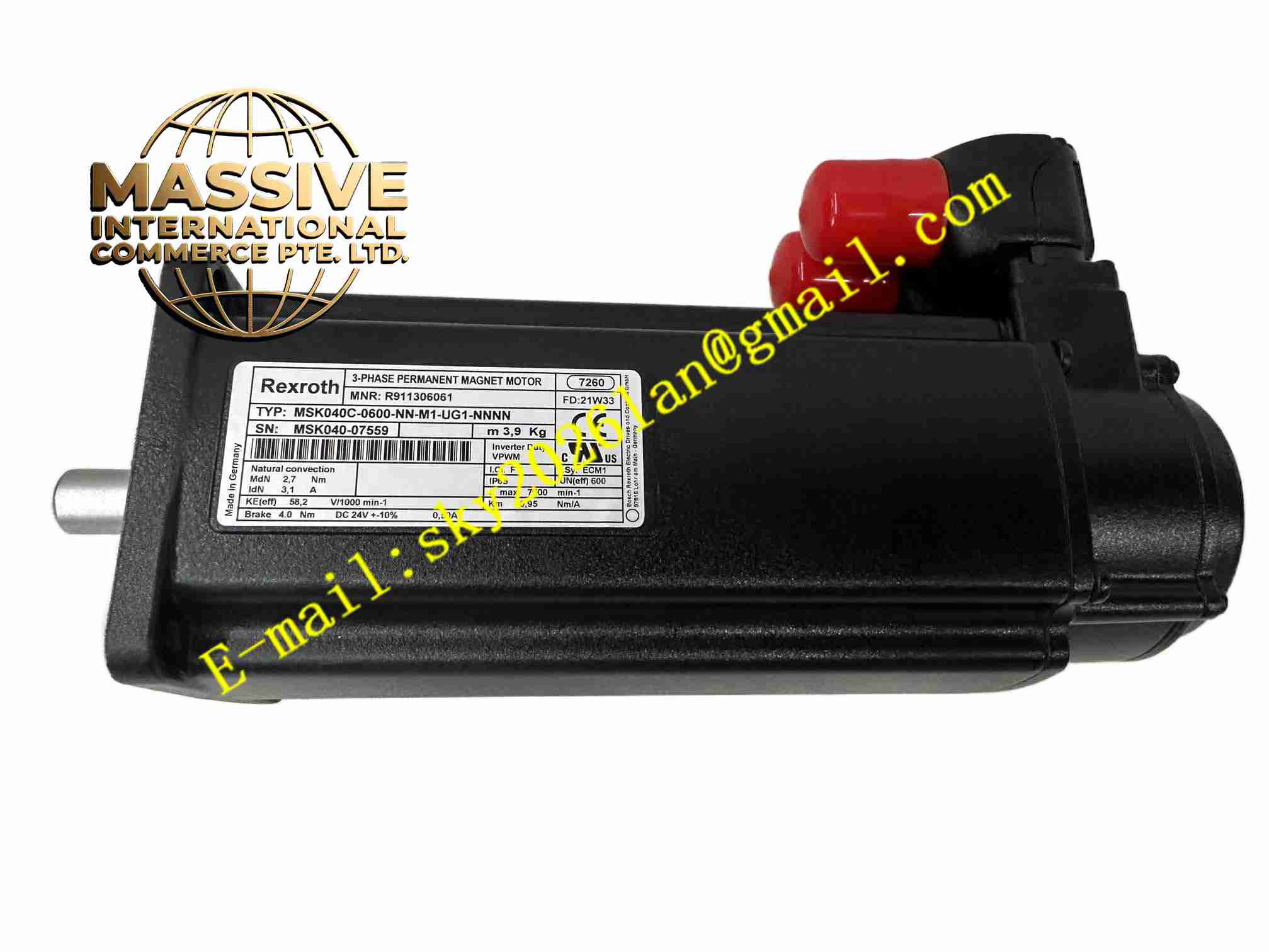
Description
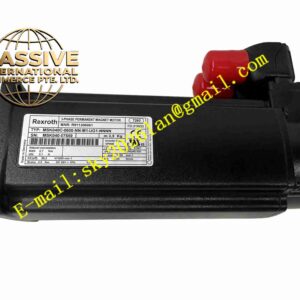
Rexroth R911306061 MSK040C-0600-NN-M1-UG1-NNNN
Technical Specifications
- Brand: Bosch Rexroth
- Material Number: R911306061
- Motor Series: MSK synchronous servo motor
- Frame Size: MSK040C
- Speed Code: 0600
- Connection Type: NN
- Motor Variant: M1
- Encoder/Feedback Variant: UG1
- Additional Options: NNNN
- Motor Type: Three-phase synchronous servo motor
- Cooling: Natural convection or forced ventilation depending on installation
- Insulation Class: Designed for industrial servo drive applications
- Encoder: Integrated encoder system as defined by UG1 variant
- Drive Compatibility: Bosch Rexroth IndraDrive drive systems
- Maximum Speed: Up to approximately 7500 rpm for MSK040C-0600 variants
- Standstill Torque: Approximately 3.1 Nm for MSK040C-0600
- Maximum Torque: Approximately 12.4 Nm for MSK040C-0600
- Standstill Current: Approximately 3.1 A for MSK040C-0600
- Maximum Current: Approximately 12.4 A for -0600
- Rotor Inertia: Approximately 0.00014 kgm² for -0600
Functional Features
- High-dynamic synchronous servo motor design.
- Compact MSK040 frame size for space-saving installation.
- High torque density for precise motion control.
- Integrated encoder for position and speed feedback.
- Compatible with IndraDrive digital drive systems.
- Suitable for position, speed, and torque control modes.
- Low rotor inertia for fast acceleration and deceleration.
- Smooth torque output with low ripple.
- Robust industrial construction for continuous operation.
- Designed for integration into automated production systems.
Application Scenarios
- Industrial robotics and handling systems.
- CNC machine tool axes.
- Packaging machinery.
- Assembly automation.
- Printing and converting machines.
- Material handling systems.
- Precision positioning applications.
- Test and measurement equipment.
- Semiconductor manufacturing equipment.
- Textile machinery.
Performance Parameters
- Maximum speed up to approximately 7500 rpm.
- Standstill torque approximately 3.1 Nm.
- Maximum torque approximately 12.4 Nm.
- Standstill current approximately 3.1 A.
- Maximum current approximately 12.4 A.
- Rotor inertia approximately 0.00014 kgm².
- High dynamic response due to low inertia design.
- Precise position feedback through integrated encoder.
- Compatible with digital servo drive control loops.
Material Composition
- Aluminum motor housing for heat dissipation.
- Laminated steel stator core.
- Permanent magnet rotor assembly.
- Copper winding conductors.
- Precision bearings for shaft support.
- Encoder assembly for position feedback.
- Industrial-grade connector interface.
- Protective sealing elements.
Structural Features
- Compact cylindrical motor body.
- Flange mounting interface for rigid mechanical connection.
- Smooth output shaft for coupling or gearbox connection.
- Integrated encoder housing.
- Power and feedback connector interfaces.
- Cooling fins or smooth housing depending on variant.
- Nameplate with material number, serial number, and electrical data.
- Robust cable entry design for industrial environments.
Working Principle
The synchronous servo motor operates as a three-phase permanent magnet synchronous machine. The IndraDrive drive system supplies controlled three-phase current to the stator windings, generating a rotating magnetic field. The permanent magnet rotor follows this rotating field, producing torque proportional to the current. The integrated encoder continuously measures rotor position and speed, providing feedback to the drive controller. The drive system uses this feedback to regulate position, speed, and torque with high precision. The low rotor inertia allows rapid acceleration and deceleration, while the high torque density supports demanding dynamic applications.
Installation Requirements
- Mount the motor securely using the designated flange and mounting holes.
- Align the motor shaft carefully with the driven mechanism.
- Use a suitable coupling or gearbox matched to the motor shaft.
- Connect the power cable to the IndraDrive drive system.
- Connect the encoder feedback cable to the drive controller.
- Ensure correct cable routing to avoid mechanical stress.
- Verify drive parameterization matches the motor material number.
- Confirm encoder type and configuration in the drive software.
- Ensure adequate ventilation around the motor housing.
- Check shaft rotation direction during initial commissioning.
- Observe torque and speed limits during application testing.
Precautions for Use
- Do not exceed the maximum rated speed of the motor.
- Do not exceed the maximum torque or current ratings.
- Ensure the drive system is correctly parameterized for this motor.
- Do not apply mechanical shock loads to the motor shaft.
- Protect cables from oil, coolant, and mechanical damage.
- Do not disassemble the motor or encoder assembly.
- Verify grounding and shielding for EMC compliance.
- Allow the motor to cool before performing maintenance.
- Use only genuine Rexroth cables and connectors.
- Refer to the official MSK motor project planning manual for detailed electrical and mechanical data.