


Description
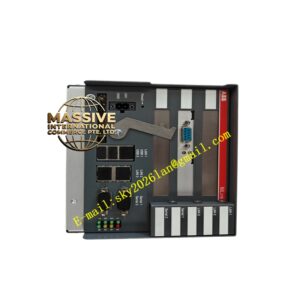
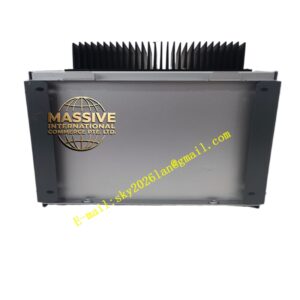
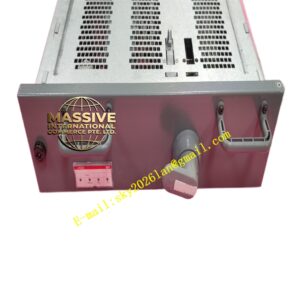
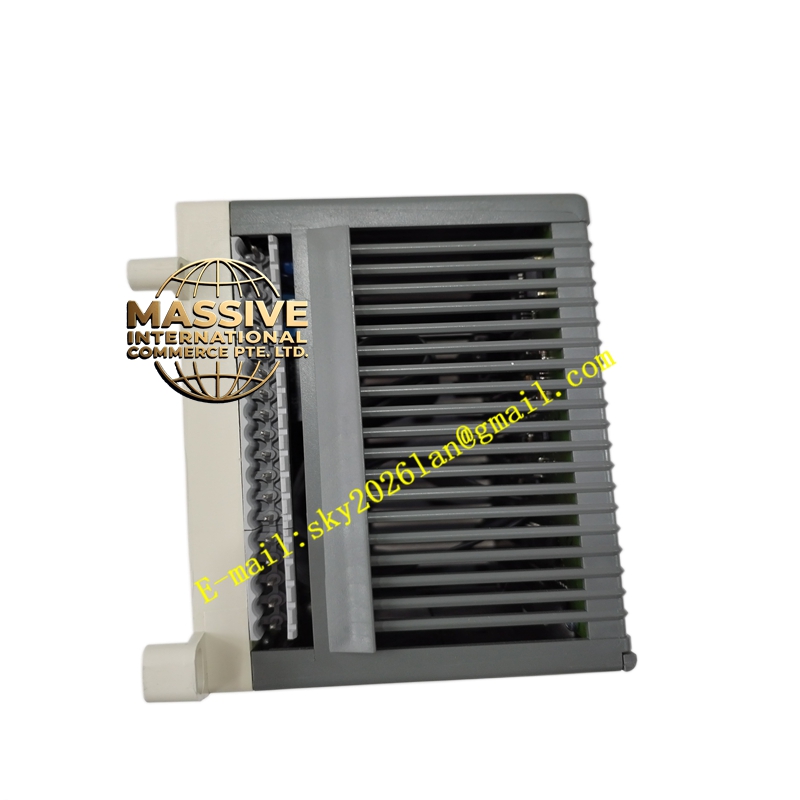
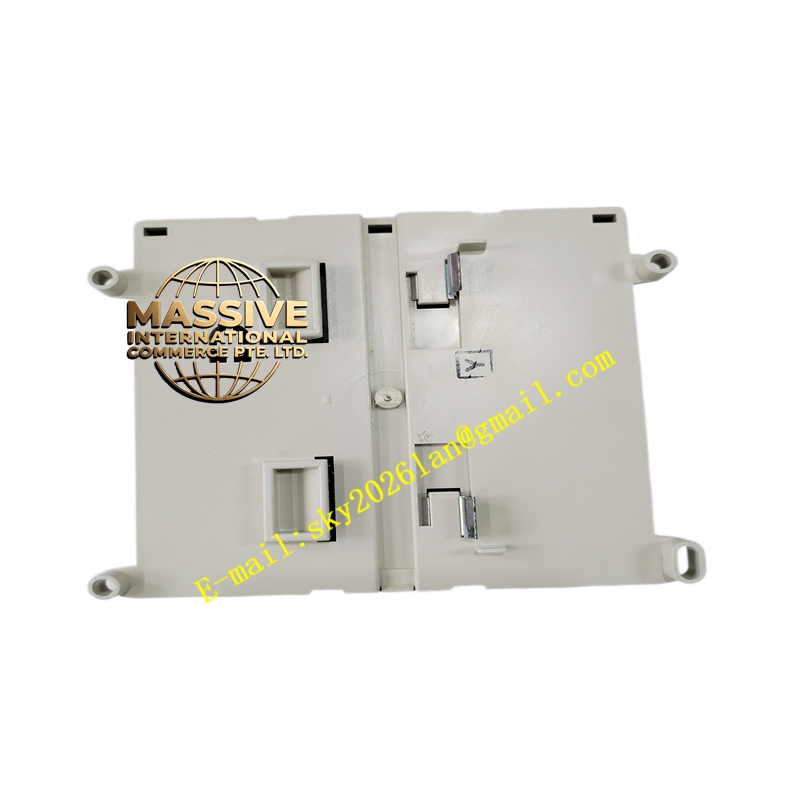
ABB 07AI91
Technical Specifications:
- Module Type: Analog Input (AI) Module.
- Channel Count: 8 independent analog input channels.
- Input Signals: Configurable for standard Voltage (e.g., 0-10V) and Current (e.g., 4-20mA) signals.
- Resolution: High-resolution ADC for precise measurement.
- Dimensions: 109 mm x 70 mm x 25 mm.
- Weight: Approximately 100 g to 200 g.
- Electrical Isolation: Galvanic isolation between inputs and the PLC bus.
Functional Features:
- Multi-Signal Compatibility: Flexibly handles various standard industrial analog signals without requiring external signal conditioners.
- High Precision & Accuracy: Delivers stable, high-resolution measurements with excellent linearity and low temperature drift.
- Strong Anti-Interference: Built-in hardware filtering and electrical isolation protect against electromagnetic noise in harsh plant environments.
- Advanced Diagnostics: Supports wire-break detection and out-of-range alarming for proactive maintenance.
Application Scenarios:
- Continuous process control (temperature, pressure, flow, and level monitoring).
- Motor drive feedback (current, speed, and position monitoring).
- Environmental monitoring and data acquisition systems.
- Retrofitting and maintaining legacy ABB AC31 control systems.
Material Composition & Structural Characteristics:
- Form Factor: Compact, lightweight industrial module optimized for dense I/O packing.
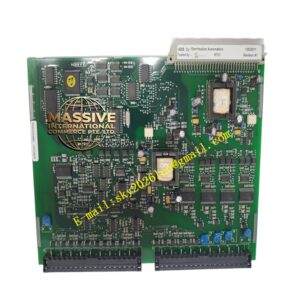
- PCB Assembly: Precision analog front-end components, including low-drift operational amplifiers and high-quality ADCs.
- Connectors: Pluggable terminal blocks or front-panel connectors for fast field wiring and module replacement.
- Housing: Durable, anti-static plastic enclosure with clear labeling for channel identification.
Working Principle:
Field sensors transmit analog voltage or current signals to the module’s input terminals. Internal signal conditioning circuits filter, scale, and protect the signals. A high-resolution Analog-to-Digital Converter (ADC) then digitizes the analog waveform into a precise integer value. The module’s microcontroller applies scaling and linearization algorithms before transmitting the final engineering unit values to the PLC via the system bus.
Installation Requirements:
- Wiring Best Practices: Always use shielded twisted-pair cables for analog signals to reject electromagnetic interference (EMI).
- Shield Grounding: Connect the cable shield to the designated analog ground terminal at the module side only to prevent ground loops.
- Software Configuration: Use the appropriate ABB programming software (e.g., Automation Builder) to configure the input type, scaling, and filtering parameters.
- Environment: Avoid installing the module in areas with excessive vibration, moisture, or corrosive gases.
Usage Precautions:
- Signal Matching: Ensure the field transmitter output perfectly matches the configured input range in the software to prevent scaling errors.
- Loop Power: Verify whether the module provides 2-wire transmitter loop power or if an external power supply is required.
- Calibration: Perform periodic loop checks using a precision signal calibrator to maintain measurement accuracy over time.
- Handling: Treat as a sensitive electronic device; avoid touching the PCB directly and always observe ESD safety protocols.