


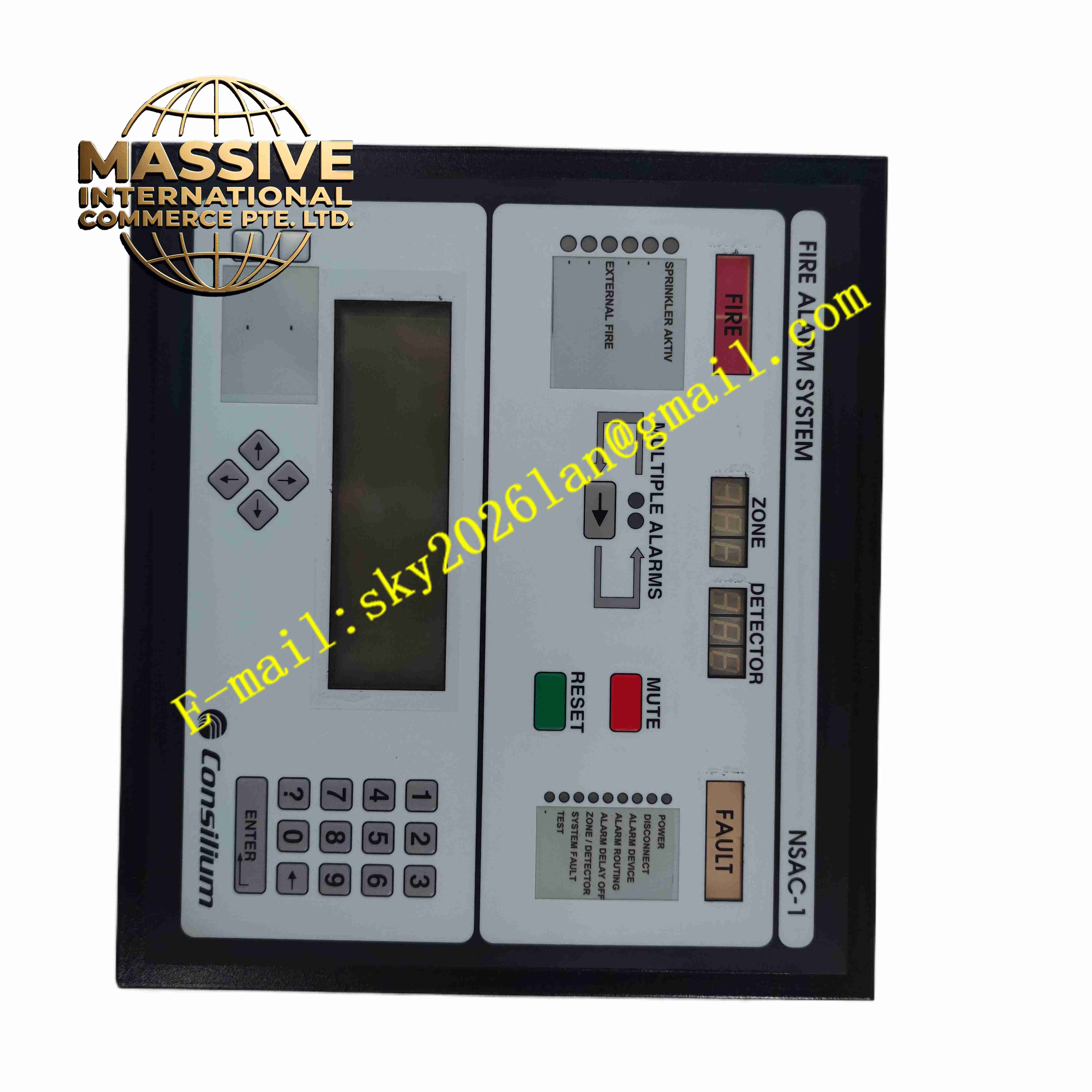
Description
CONSILIUM NSAC-1
Technical Specifications: Product type: Marine fire and gas safety network controller module Power supply: Marine rated DC supply from fire alarm cabinet Communication interface: Proprietary marine safety network bus Operating temperature range: -20℃ ~ +70℃ Storage temperature range: -40℃ ~ +85℃ Relative humidity: Up to 95%, non-condensing Environmental rating: Marine salt spray and vibration certified Protection grade: IP20 when installed inside fire control cabinet
Functional Features: Collect status signals from distributed fire detectors, smoke sensors and gas detectors on vessel network. Process fire alarm, pre-alarm, sensor fault and cable breakage events. Redundant network communication to maintain alarm data transmission under single line fault. Real-time alarm event recording and time stamping of all safety events. Transmit alarm and fault information to main fire control panel and ship SCADA system. Hardware self-diagnosis for module internal circuit and network communication health. Non-volatile memory stores event log and configuration parameters after power loss. Marine conformal coating protects PCB against moisture and salt fog corrosion.
Application Scenarios: Cargo vessel fire safety system, passenger ship fire and gas monitoring, offshore platform fire detection network, FPSO safety alarm system, marine engine room smoke monitoring, ship cargo hold fire detection, marine safety automation control system.
Performance Parameters: Fast alarm event detection and signal transmission for safety critical application. Redundant network ensures continuous communication upon single cable failure. Long-term stable operation under marine vibration, humidity and salt fog environment. Event log retains all alarm and fault records for post-incident review. High immunity to marine onboard electromagnetic interference.
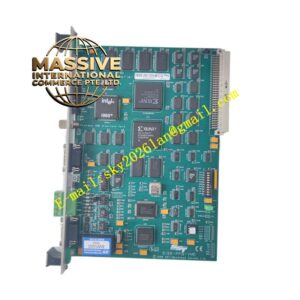
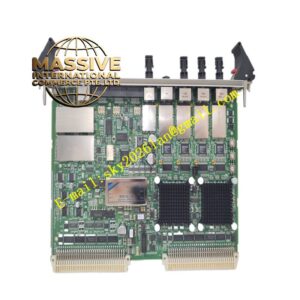
Material Composition: PCB substrate: Multi-layer FR4 glass fiber epoxy printed circuit board. PCB surface treatment: Full conformal coating for salt fog and moisture protection. Core components: Network communication processor, signal transceiver chip, non-volatile memory. Front panel: Marine grade aluminum alloy panel with LED status indicators. Backplane connector: Gold plated anti-corrosion copper alloy contact pins. Terminal blocks: PA66 flame retardant plastic marine grade wiring terminals.
Structural Features: Standard single slot plug-in module structure for Consilium marine fire control rack. Aluminum front panel fitted with multiple LED indicators for power, network status and alarm. Internal circuit separated into network communication area, signal input processing area and memory storage area. Mechanical locking latch to fix module firmly against vessel vibration. Isolation circuit between field sensor network and internal controller circuit.
Working Principle: Module receives DC power supply from marine fire alarm cabinet backplane. It communicates with distributed fire and gas detectors over redundant marine safety network bus. The module continuously polls detector nodes to read real-time sensor values and device status. When fire or gas concentration exceeds threshold, the module captures alarm event, records timestamp and transmits alarm signal to main fire panel and ship automation system. Self-diagnosis circuit detects cable break, network disconnection and module hardware fault, and generates fault alarm signal. All event logs and configuration data are saved into non-volatile memory.
Installation Requirements: Cut off fire cabinet power supply before inserting or removing NSAC-1 module. Insert module into designated rack slot and lock mechanical latch. Connect field detector network cables to module terminal blocks following wiring schematic. Complete network address assignment and detector configuration before system commissioning. Ensure marine cabinet protective earth ground connection is reliable. Separate safety signal cables from high power motor and power cables. Reserve ventilation clearance around module for heat dissipation.
Usage Notes: Hot swap operation is forbidden when fire alarm cabinet is energized. Backup system configuration and detector mapping before module replacement. Use marine grade shielded twisted pair cable for detector network wiring. Regularly inspect terminal tightness and cable insulation under vessel vibration. Wear anti-static wristband during module maintenance. Do not scratch PCB conformal coating surface. Keep cabinet sealed to reduce salt fog and moisture ingress.