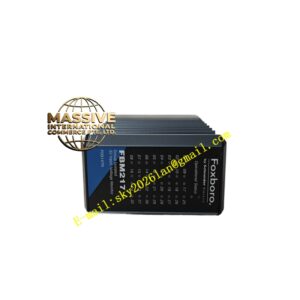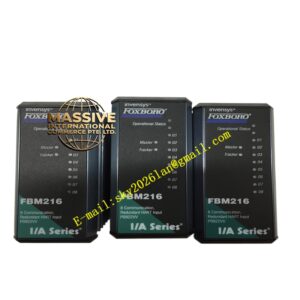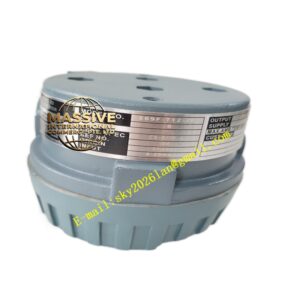




Description
Foxboro 761CNA-BT
Technical Specifications
- Product Type: Pneumatic Differential Pressure Transmitter.
- Output Signal: 3-15 psi proportional to differential pressure.
- Supply Pressure: Typically 20-30 psi.
- Measurement Principle: Force-balance.
Functional Features
- Mechanical Reliability: Minimal electronic components ensure long-term stability and resistance to electrical noise.
- Simple Calibration: External zero and span adjustment screws allow for easy field setup.
- Rugged Construction: Built to withstand harsh industrial environments, vibration, and temperature fluctuations.
- Interchangeability: Sensor capsules can often be swapped without recalibration.
Application Scenarios
Commonly found in legacy power plants, water treatment facilities, and older chemical processes for measuring filter differential pressure, tank level (via head pressure), and steam or liquid flow.
Performance Parameters
- Accuracy: Typically ±0.5% of span.
- Stability: ±0.5% of upper range limit per year.
- Temperature Effect: Minimal drift over the operating temperature range.
Material Composition
The sensor capsule and wetted parts are typically 316 stainless steel for corrosion resistance. The housing is cast aluminum with a durable epoxy or polyurethane coating.
Structural Characteristics
A cylindrical, bullet-nosed housing with a bolted cover. Features external adjustment screws for zero and span, protected by a tamper-resistant cover. Includes a local analog gauge option for visual indication.
Working Principle
Applied differential pressure causes a deflection in a force-balance sensor element. This deflection is countered by a pneumatic feedback bellows. The air pressure required to maintain this balance is the 3-15 psi output signal, which is directly proportional to the applied differential pressure.
Installation Requirements
Mount vertically or horizontally as specified. Connect impulse lines securely and ensure proper slope to prevent gas or liquid traps. Allow the transmitter to warm up for 15-30 minutes before calibration.
Usage Precautions
- Do not apply overpressure beyond the rated limit to avoid damaging the sensor capsule.
- Avoid water hammer or pressure spikes.
- Perform regular zero checks and calibrations using a precision pressure source.