


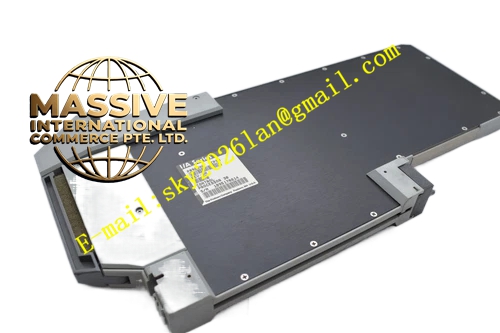
Description
Foxboro CP-30
Technical Specifications
- Product Type: Control Processor.
- Architecture: 32-bit RISC with hardware-accelerated floating-point unit.
- I/O Capacity: Supports extensive I/O expansion via fieldbus modules.
- Network: Dual redundant Ethernet for control network connectivity.
Functional Features
- Deterministic Performance: Separates control execution from communication tasks.
- Scalability: Supports connection to dozens of Fieldbus Modules (FBM).
- Real-Time Operation: Guarantees deterministic response for critical safety and control interlocks.
- Self-Diagnostics: Continuous monitoring of processor health and communication status.
Application Scenarios
Critical for large petrochemical complexes, power generation turbine control, and any continuous process where system availability directly impacts production output and safety.
Performance Parameters
- Failover Time: Less than 100ms seamless transition.
- MTBF: Greater than 150,000 hours.
- Certifications: UL, cULus, CE, ATEX, SIL 3.
Material Composition
High-reliability industrial components selected for long-term stability. PCBs feature multi-layer design for signal integrity and thermal management.
Structural Characteristics
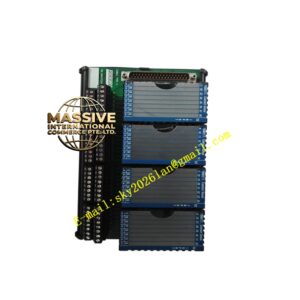
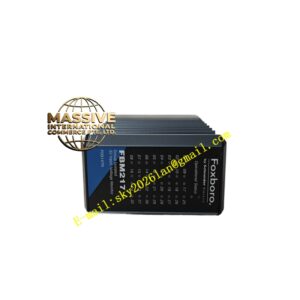
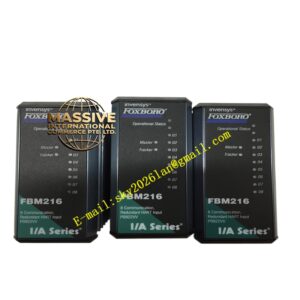
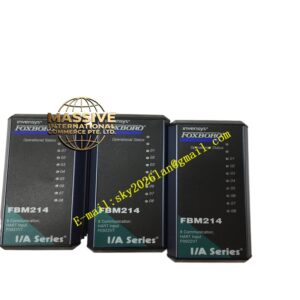
Standard module form factor with front-panel LEDs indicating Primary/Secondary status, run state, and error conditions. Includes a battery compartment for memory retention.
Working Principle
Executes the user-defined control algorithm in a cyclic scan. It manages I/O data transfers, handles communication traffic, and maintains synchronization with its redundant partner to provide bumpless transfer during faults.
Installation Requirements
Must be installed in a designated controller slot. Redundant processors require a dedicated synchronization cable connection. Ensure the cabinet grounding meets industrial standards.
Usage Precautions
- Always verify the redundancy status before performing maintenance on the primary processor.
- Keep firmware versions consistent across redundant processors.
- Do not block the ventilation areas on the module or cabinet.