


Description
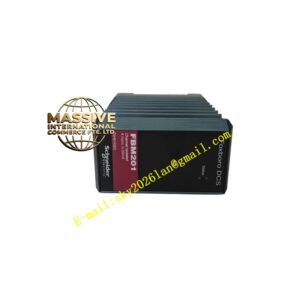
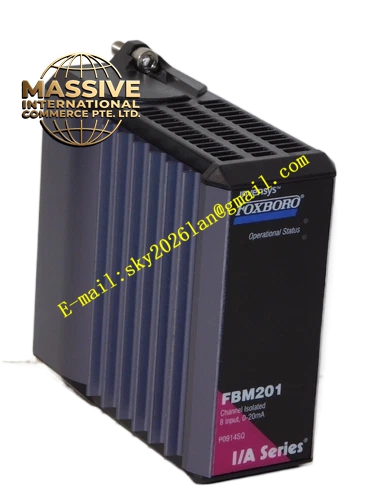
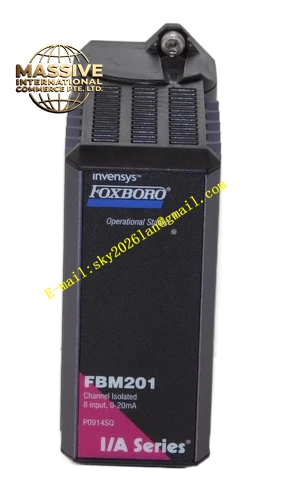
Foxboro FBM201
Technical Specifications
- Model Number: FBM201 (Part Number: P0914SQ)
- Channel Capacity: 8 isolated, independent analog input channels
- Signal Range: 0 to 20 mA DC
- Data Conversion: Sigma-Delta ADC technology
Functional Features
- High-Precision Acquisition: Utilizes advanced Sigma-Delta conversion to deliver exceptional measurement accuracy.
- Complete Isolation: Every input channel is electrically isolated from other channels and ground, preventing ground loops.
- Flexible Configuration: Allows user-defined settings for conversion time, integration time, and rate-of-change limits.
Application Scenarios
Essential for monitoring pressure, flow, and level transmitters across manufacturing, petrochemical, and water treatment industries.
Performance Parameters
- Operating Temperature: -40°C to +70°C
- Environmental Humidity: 5% to 95% (non-condensing)
- Communication: Redundant 2 Mbps module fieldbus
Material Composition
Features a compact, sturdy design with industrial-grade electronic components and conformal coating to protect against harsh G3-class environments.
Structural Characteristics
- Dimensions: Approximately 10.4 cm x 4.5 cm x 11.4 cm
- Weight: Lightweight at approximately 0.284 kg for easy handling.
Working Principle
Field current signals are conditioned, filtered, and converted to digital values using high-resolution Sigma-Delta ADCs. The onboard processor applies scaling and filtering before transmitting the data over the redundant fieldbus.
Installation Requirements
Requires a dedicated termination assembly (TA) for field wiring. Must be securely seated on the FBM baseplate.
Usage Precautions
Do not apply currents exceeding the 20 mA maximum range. Verify proper grounding of signal shields to prevent noise interference.