



Description
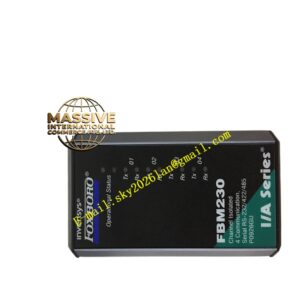
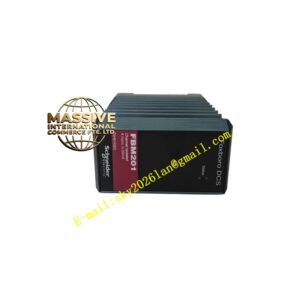
Foxboro FBM224 P0926GG
Technical Specifications
- Communication Ports: 4 independent serial ports.
- Protocol Support: Modbus RTU.
- Port Configuration: Each port configurable via DIP switches for RS-232, RS-422, or RS-485.
- Device Capacity: Up to 64 Modbus slave devices per FBM.
Functional Features
- Flexible Port Grouping: Ports can be grouped to support redundant communication with dual-port Modbus devices.
- High Transaction Capacity: Supports up to 64 independent transactions per Modbus device.
- Master/Slave Architecture: Operates strictly as a Modbus Master, polling configured slaves.
- Configuration Tools: Supported by dedicated Windows/Solaris configuration software for easy setup.
Application Scenarios
Essential for integrating third-party PLCs, motor control centers, skid-mounted packages, and legacy instrumentation into the Foxboro Evo or I/A Series DCS.
Performance Parameters
- Baud Rates: Configurable standard serial baud rates.
- Scan Frequency: Independent of configured scan rates for output requests.
- Operating Temperature: Adaptable to G3 harsh environment requirements.
Material Composition
Industrial-grade enclosure with conformal-coated internal PCBs for reliable operation in electrically noisy environments.
Structural Characteristics
- Termination: Utilizes a 4-port Termination Assembly (TA) with DB-25 or compression terminals.
- Indicators: Front-panel LEDs for Tx, Rx, and port isolation status.
Working Principle
The FBM224 receives scan requests from the FCP, formats them into Modbus RTU frames, and transmits them over the configured serial port. It receives responses from slave devices and maps the data into the FCP database.
Installation Requirements
- Must be paired with the 4-port Modbus TA.
- RS-485 networks require proper termination resistors configured via TA DIP switches.
- RS-232 connections require careful cross-wiring configuration via the TA DIP switch bar.
Precautions for Use
- Double-check DIP switch settings for RS-232 wiring to prevent communication failure or hardware damage.
- Use shielded twisted-pair cables for all serial connections.
- Ensure Modbus slave addresses do not conflict on the same serial bus.