


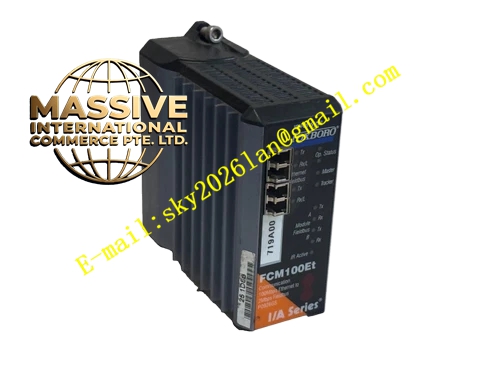
Description
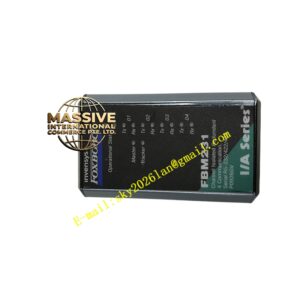
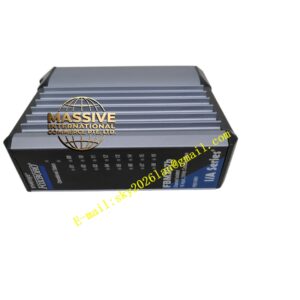
Foxboro FCM270
Technical Specifications
- Product Type: Field Control Module / Controller.
- Processor: High-performance 32-bit industrial RISC processor.
- Memory: Ample RAM and Flash for extensive control strategies, data logging, and historical trending.
- Communication: Redundant Ethernet and I/A Series Fieldbus interfaces.
- I/O Capacity: Supports extensive I/O expansion via fieldbus modules.
Functional Features
- Advanced Control Algorithms: Natively supports PID, cascade, ratio, sequence, batch, and advanced process control.
- Hot-Standby Redundancy: Provides bumpless transfer with failover times of <100ms for maximum system availability.
- Online Modification: Allows control logic changes, tuning, and configuration updates without stopping the process.
- Local HMI Support: Can connect to local operator interfaces for standalone operation and diagnostics.
Application Scenarios
The core processing unit for unit-level control in refineries, chemical plants, and power stations. Also ideal as a remote controller for skid-mounted packages or distributed process areas.
Performance Parameters
- Scan Cycle: Fast, deterministic execution for high-speed control loops.
- Failover Time: <100ms seamless transition during redundancy switchover.
- Data Integrity: Advanced error-checking, memory protection, and watchdog timers.
- MTBF: Greater than 150,000 hours for continuous industrial duty.
Material Composition
High-reliability industrial components on multi-layer PCBs with conformal coating. Robust connectors with gold-plated contacts for long-term reliability in harsh environments.
Structural Characteristics
Standard module form factor with a secure locking mechanism for backplane connection. Front panel includes comprehensive status LEDs for Run, Fault, Primary/Secondary status, battery health, and communication activity.
Working Principle
The FCM270 continuously scans the control database, executing logic blocks based on priority. It reads inputs from local or remote I/O, performs calculations, updates outputs, and synchronizes its state with a redundant partner via a dedicated sync link. It also manages all network communication transparently.
Installation Requirements
Install in a designated controller slot or mount as a standalone unit. Connect the redundancy sync cable if operating in a 1:1 redundant pair. Ensure adequate cabinet ventilation and proper grounding.
Usage Precautions
- Replace the memory battery according to the maintenance schedule to prevent data loss.
- Avoid forcing modifications to safety-critical parameters while in RUN mode.
- Monitor system logs after any redundancy switchover to identify the root cause.
- Keep firmware versions consistent across redundant processors to ensure proper synchronization.