


Description
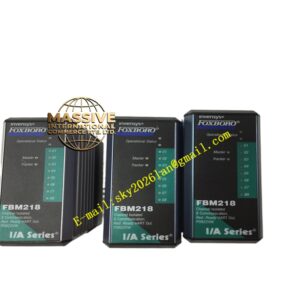
Foxboro P0950CA
Technical Specifications
- Channel Type: Dual Baud Intelligent Transmitter Interface.
- Communication Protocol: HART / Foundation Fieldbus compatible.
- Bus Interface: Redundant 2 Mbps module fieldbus.
- Baud Rates: Supports simultaneous dual-baud communication.
Functional Features
- Dual Baud Support: Efficiently manages communication with legacy and modern smart transmitters on the same loop.
- Device Diagnostics: Extracts and forwards detailed diagnostic data from intelligent transmitters to the host system.
- Signal Conditioning: Accurately converts digital smart signals into standard process variables for the DCS database.
Application Scenarios
Ideal for process plants undergoing migration or utilizing mixed generations of smart field instruments, particularly in chemical and petrochemical applications.
Performance Parameters
- Data Accuracy: High-fidelity signal conversion with minimal latency.
- Channel Density: Maximizes the number of smart devices per module.
Material Composition
Industrial-grade PCB with conformal coating, housed in a ruggedized metal enclosure for EMI protection.
Structural Characteristics
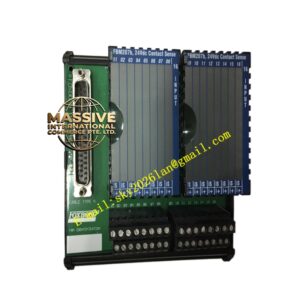
- Terminal Interface: Connects to specific Foxboro Terminal Assemblies (TA).
- Status Indicators: LEDs for bus communication, power, and channel activity.
Working Principle
The P0950CA polls connected intelligent transmitters at their respective baud rates, extracting process variables and diagnostic parameters. It packages this data and transmits it over the redundant fieldbus to the control processor, while also accepting configuration and calibration commands from the host.
Installation Requirements
- Must be installed on a compatible modular baseplate.
- Use shielded twisted-pair cables for field connections.
- Configure baud rates correctly in the system engineering tool.
Usage Precautions
- Ensure field device addresses are unique to prevent communication collisions.
- Verify compatibility with specific smart transmitter models before deployment.
- Monitor bus load to prevent communication bottlenecks.