


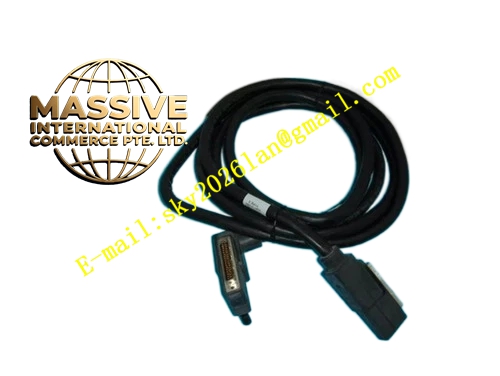
Description
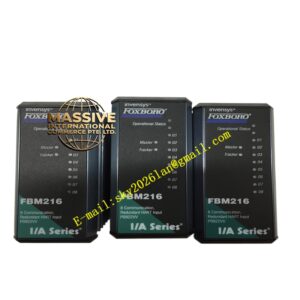
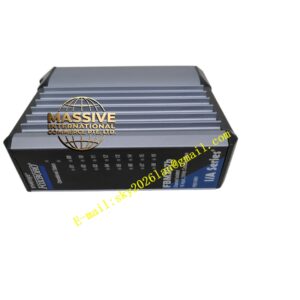
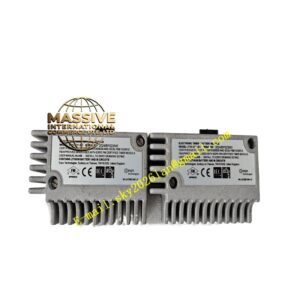
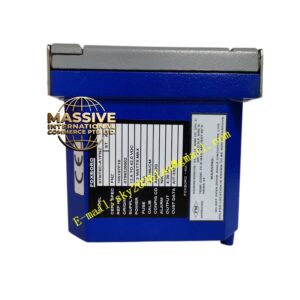
Foxboro PO926KP
Technical Specifications
- Processor: 32-bit industrial-grade RISC.
- Storage Capacity: 8MB program memory / 4MB data memory.
- Communication Network: 100Mbps fiber optic Ethernet, ControlNet, RS-232.
- Power Supply: 24VDC, 10W.
Functional Features
- Multi-Task Processing: Simultaneously executes regulation, logic, timing, and sequential control.
- High-Speed Data Interaction: Achieves rapid data coordination via fiber optic Ethernet.
- High-Reliability Redundancy: Supports controller hot-standby and power redundancy.
- Data Integrity: Bit-by-bit matching technology completely eliminates erroneous data transmission.
Application Scenarios
Applicable to large-scale industrial process control scenarios with extreme reliability requirements, such as chemical processing, power generation, and metallurgy.
Performance Parameters
- Operating Temperature: 0℃ to 60℃.
- Storage Temperature: -40℃ to 85℃.
- Ingress Protection: IP20.
Material Composition
Robust die-cast aluminum housing combined with internally conformal-coated circuit boards offers superior EMI resistance and anti-corrosion capabilities.
Structural Characteristics
- Dimensions: 140mm × 165mm × 45mm.
- Weight: 0.6kg.
- Interfaces: High-density backplane connectors alongside fiber optic/Ethernet ports.
Working Principle
Continuously scans field input signals, executes control algorithms to derive output values, and synchronizes status with other nodes via a redundant network for global coordinated control.
Installation Requirements
- Maintain control cabinet ambient temperature strictly below 60℃.
- Keep fiber optic connections clean and avoid bending beyond minimum radius.
- Correctly configure redundancy jumpers or DIP switches.
Usage Precautions
- Regularly inspect synchronization status indicator lights on redundant modules.
- Avoid unsecured usage in high-vibration environments.
- Store spare modules in moisture-proof and anti-static conditions.