


Description
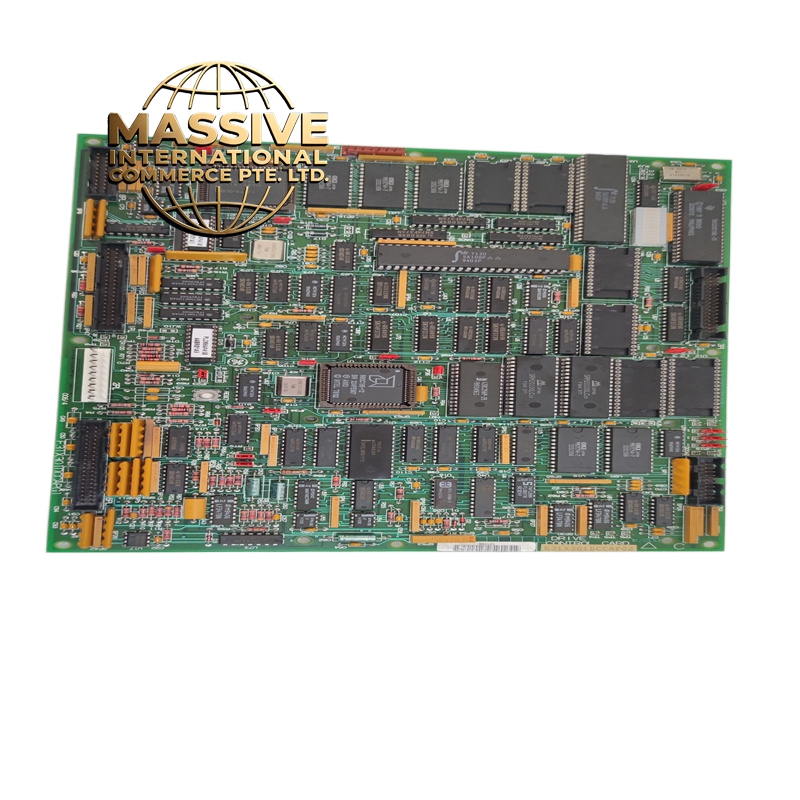
GE 531X301DCCAFG2 Technical Specifications:
- Product Type: Drive Control Board / Motor Controller.
- Manufacturer: General Electric (GE).
- Processing Core: Advanced microprocessor architecture for high-speed computational tasks.
- Data Acquisition: Integrated high-resolution ADCs for real-time feedback processing.
- Control Algorithms: Supports vector control, V/Hz control, and advanced PID tuning.
- Environmental Rating: Designed to withstand harsh industrial environments with wide temperature and humidity tolerances.
Functional Features:
- Precision Motor Control: Delivers highly accurate torque and speed regulation for synchronous and induction motors.
- Real-Time Data Processing: Rapidly processes feedback from encoders, resolvers, and current sensors to optimize motor performance.
- Flexible Configuration: Supports customizable control loops, acceleration/deceleration ramps, and programmable I/O logic.
- Integrated Diagnostics: Continuously monitors internal board health, motor temperature, and drive faults to prevent catastrophic failures.
- Communication Ready: Interfaces seamlessly with higher-level PLCs, HMIs, and industrial networks for centralized monitoring.
Application Scenarios:
- Industrial manufacturing automation, including CNC machines, robotics, and conveyors.
- High-performance centrifugal pumps, fans, and compressors.
- Extruders, mixers, and winding machines in plastics and paper industries.
- Heavy-duty material handling and crane systems.
Performance Parameters:
- Response Time: Microsecond-level processing speed for ultra-fast current loop regulation.
- Resolution: High-precision feedback processing ensuring smooth motor operation at zero speed.
- Reliability: Engineered with high-grade electronic components and rigorous quality control for extended Mean Time Between Failures (MTBF).
- Scalability: Adaptable to various motor sizes and application requirements through software parameterization.
Material Composition & Structural Characteristics:
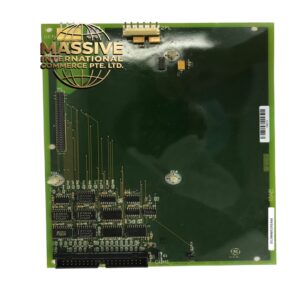
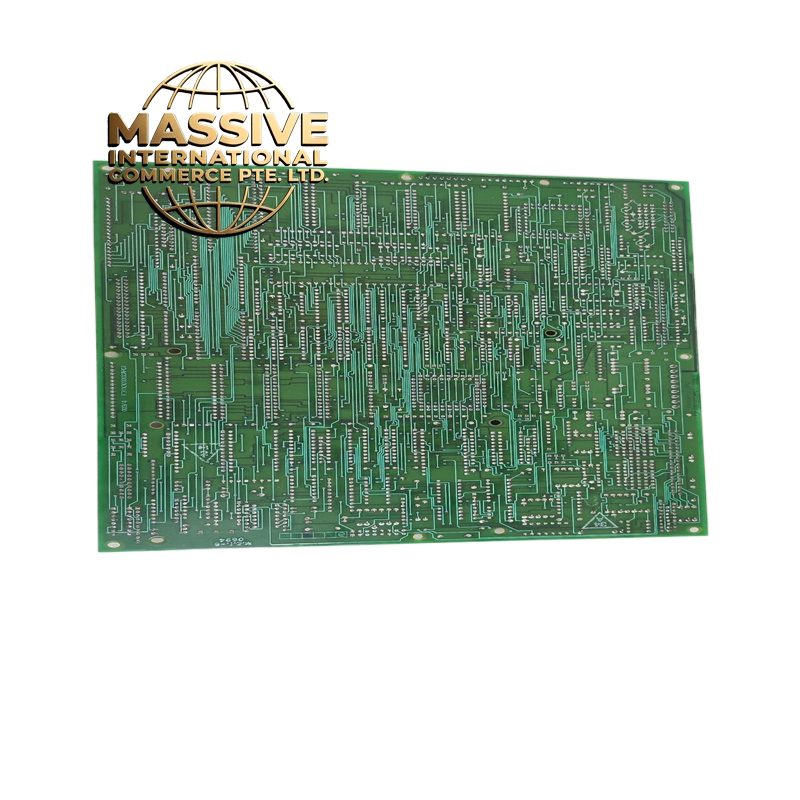
- PCB Assembly: Multi-layer printed circuit board with gold-plated edge connectors for reliable backplane communication.
- Components: Surface-mount technology (SMT) featuring DSPs, FPGAs, precision resistors, and optical isolators.
- Thermal Management: Strategically placed heat sinks and thermal vias to dissipate heat from high-speed processing ICs.
- Mechanical Design: Compact form factor with alignment pins and secure mounting holes for vibration resistance.
Working Principle: The board receives operational setpoints from the main system controller and feedback signals from the motor. The internal DSP executes field-oriented control (FOC) or other advanced algorithms to calculate the required voltage and frequency. It then generates Pulse Width Modulation (PWM) signals, which are sent to the drive’s power stage (IGBTs) to precisely control the motor’s magnetic field and rotational speed.
Installation Requirements:
- Static Protection: Strictly adhere to ESD (Electrostatic Discharge) protocols, including wrist straps and grounded mats, during handling.
- Seating: Align the board carefully with the drive chassis backplane and press firmly to ensure all edge connectors are fully seated.
- Jumper Configuration: Verify and set any hardware jumpers according to the specific motor and application requirements before powering up.
- Software Setup: Load the correct motor nameplate data and control parameters using the drive’s configuration software.
Usage Precautions:
- Power Down: Never insert or remove the control board while the drive is energized to prevent irreversible damage.
- Parameter Matching: Ensure the software configuration perfectly matches the connected motor and mechanical load to avoid instability.
- Environmental Limits: Operate the drive within specified ambient temperature and humidity ranges; provide adequate cabinet cooling.
- Troubleshooting: Utilize the drive’s fault history and oscilloscope functions to diagnose issues rather than repeatedly replacing hardware.