


Description
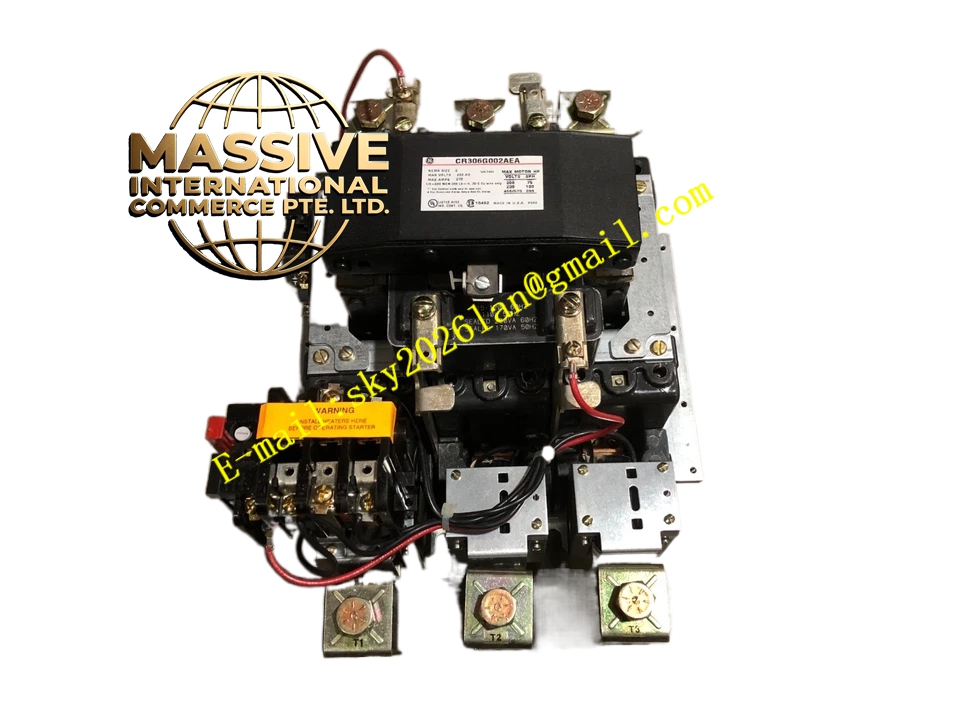
GE CR306G002
Technical Specifications
- Product Type: Motor Starter / Contactor Assembly.
- Series: GE CR306.
- Horsepower Rating: Sized for specific motor HP/kW ratings.
- Voltage Rating: Rated for standard industrial AC voltages.
Functional Features
- Power Switching: High-capacity contacts for motor inrush and running currents.
- Overload Protection: Integrated thermal or electronic overload relay to prevent motor burnout.
- Auxiliary Contacts: Provides interlocking and status feedback to control circuits.
Application Scenarios
- Industrial Motors: Pumps, fans, compressors, and conveyors.
- Motor Control Centers (MCC): Individual motor bucket installation.
Performance Parameters
- Contact Life: High electrical and mechanical endurance ratings.
- Overload Trip Class: Configurable trip class for motor starting characteristics.
Material Composition
- Contacts: Silver alloy for low resistance and arc resistance.
- Enclosure: NEMA-rated enclosure for environmental protection.
Structural Characteristics
- Design: Compact, modular design for space-efficient panel layout.
- Wiring: Pre-wired or field-wired terminal options.
Working Principle
The contactor coil energizes to close the main power contacts, applying voltage to the motor. The overload relay continuously monitors motor current; if an overcurrent condition persists beyond the trip curve, it opens the control circuit to de-energize the contactor.
Installation Requirements
- Size the starter correctly based on motor Full Load Amps (FLA).
- Set the overload relay to the motor’s nameplate FLA.
- Mount in an upright position to ensure proper mechanical operation.
Usage Precautions
- Allow the motor to cool before resetting a tripped overload.
- Perform annual maintenance to inspect contacts and test overload functionality.
- Never exceed the rated contact current or voltage.