


Description
GE IC695CPU310-GV Technical Specifications:
- Processor Core: Intel Celeron or Pentium III microprocessor.
- Clock Speed: 300 MHz.
- User Memory: 10 MB battery-backed RAM and 10 MB non-volatile Flash memory.
- Execution Speed: 0.195 ms per 1K Boolean instructions.
- I/O Capacity: Supports up to 32 Kbits of discrete I/O and 32 Kwords of analog I/O.
- Communication Interfaces: Dual embedded serial ports (RS-232 and RS-485).
- Supported Protocols: Modbus RTU Slave, SNP, and Serial I/O.
Functional Features:
- Advanced Programming Support: Fully compatible with IEC 61131-3 programming languages, including Ladder Diagram (LD), Function Block Diagram (FBD), Structured Text (ST), and C language.
- Dual Backplane Architecture: Supports both the high-speed PCI bus for advanced RX3i modules and the legacy serial bus for backward compatibility with Series 90-30 I/O modules.
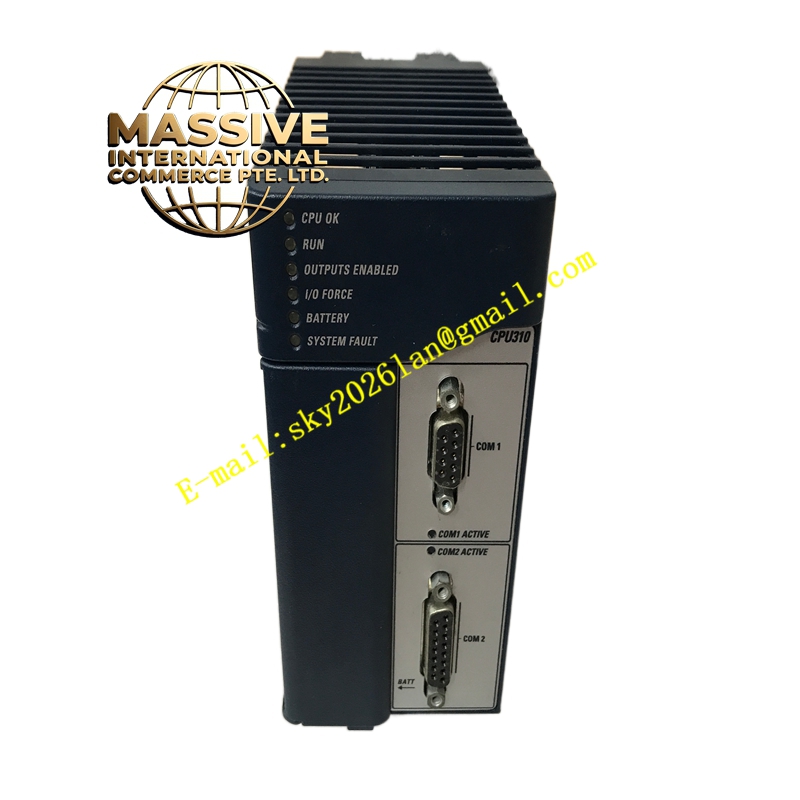
- Comprehensive Diagnostics: Features eight front-panel LED indicators providing real-time visual feedback on CPU status, battery health, communication activity, and system faults.
- Real-Time Clock: Includes an internal battery-backed calendar clock with a maximum drift of 2 seconds per day for precise time-stamping of events.
Application Scenarios:
- Continuous process control in petrochemical and refining plants.
- High-speed machine control and packaging line automation.
- Power generation and utility infrastructure management.
- Complex material handling and conveyor systems.
Performance Parameters:
- Program Blocks: Supports up to 512 program blocks, with a maximum size of 128 KB per block.
- Floating Point: Native hardware support for floating-point arithmetic.
- Firmware: System firmware is field-upgradeable to support new features and bug fixes.
- Test Edit Mode: Allows engineers to safely test program modifications in a live running environment without disrupting actual outputs.
Material Composition & Structural Characteristics:
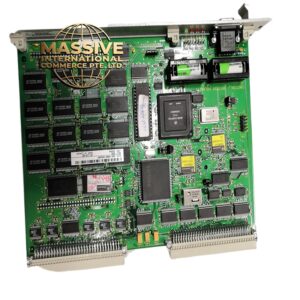
- Form Factor: Standard VME 6U form factor module.
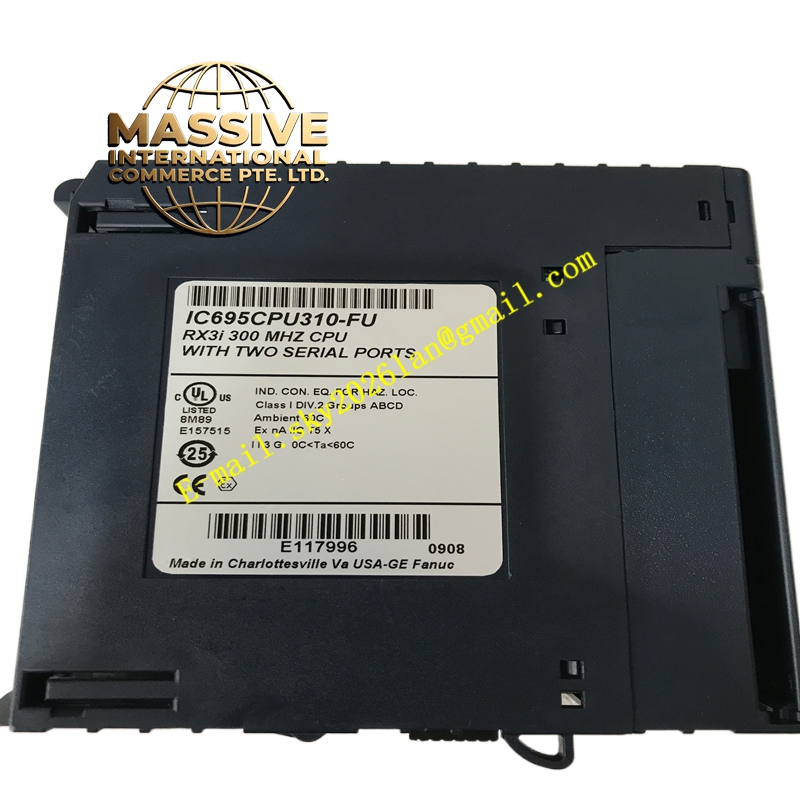
- Dimensions: Approximately 71 mm x 135 mm x 135 mm.
- Weight: Approximately 0.48 kg.
- PCB Construction: Industrial-grade multi-layer printed circuit board with conformal coating for protection against moisture and dust.
- Connectors: Front-facing serial ports and robust backplane edge connectors.
Working Principle: The IC695CPU310-GV operates by continuously scanning inputs, executing the user-defined control logic stored in its RAM/Flash, and updating outputs within a deterministic cycle. It utilizes the dual backplane to communicate with local and remote I/O racks, processing data packets via the high-speed PCI bus or serial bus. The embedded serial ports handle direct communication with HMIs, barcode scanners, or other serial devices using the configured protocols.
Installation Requirements:
- Backplane Compatibility: Must be installed in a 12-slot or 16-slot RX3i universal backplane.
- Power Supply: Requires a stable backplane power draw of 1.25A at 3.3 VDC and 1.0A at 5 VDC.
- Environmental Limits: Designed for operation in ambient temperatures ranging from 0°C to 60°C with 5% to 95% relative humidity (non-condensing).
- Battery Installation: Ensure the IC695ACC302 smart lithium battery is properly installed to maintain RAM and RTC data during power loss.
Usage Precautions:
- ESD Protection: Always utilize proper Electrostatic Discharge (ESD) grounding straps when handling or installing the CPU to prevent damage to sensitive microprocessors.
- LED Monitoring: Regularly monitor the front-panel LEDs; a flashing red or solid red light indicates a critical system fault requiring immediate attention.
- Thermal Management: Ensure adequate airflow within the control enclosure to prevent overheating, as the processor generates significant heat during high-load operations.
- Data Backup: Maintain regular backups of the control logic and configuration parameters to external storage to prevent data loss in the event of catastrophic hardware failure.