


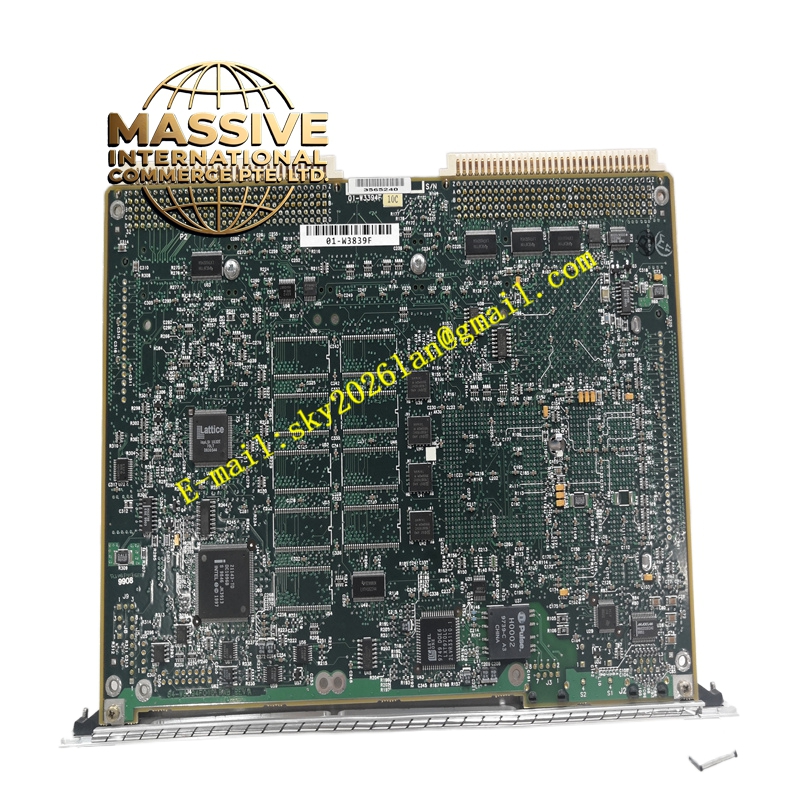
Description
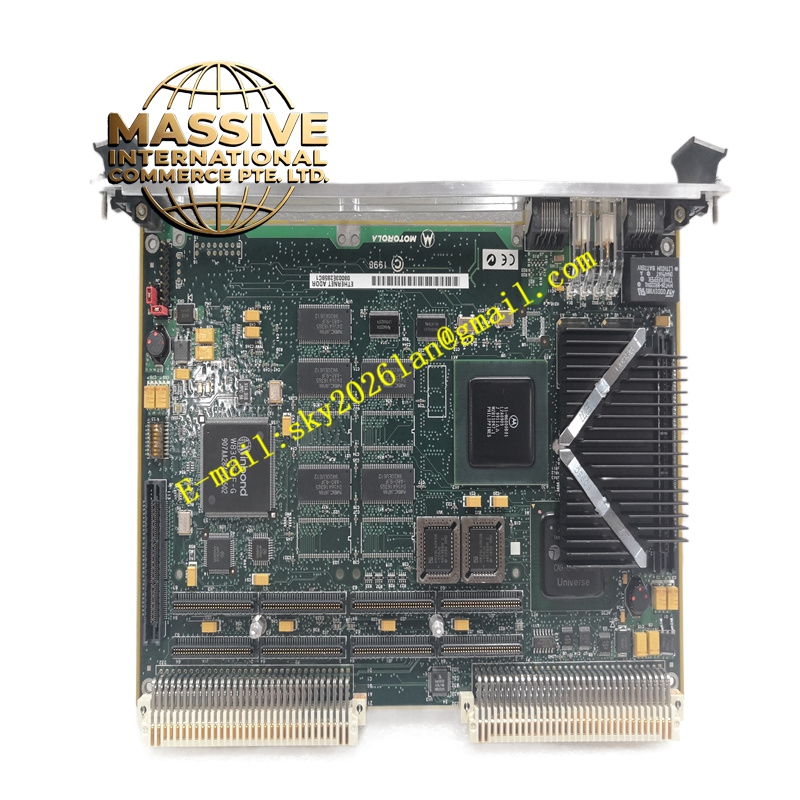
GE MVME2400
Technical Specifications:
- Processor: PowerPC 750 32-bit microprocessor
- Clock Speed: 250–450 MHz (depending on sub-model)
- L1 Cache: 32 KB instruction / 32 KB data
- L2 Cache: 1 MB backside secondary cache
- Memory: 32 MB to 512 MB on-board ECC SDRAM
- Firmware Storage: Up to 1 MB on-board firmware
- Flash Memory: 8 MB on-board Flash
- NVRAM: 8K x 8 NVRAM with time-of-day clock and replaceable battery backup
- Ethernet: 10/100 Mb/s Ethernet interface
- Serial Port: One asynchronous serial debug port
- Timers: Four 32-bit timers, one 16-bit timer, one watchdog timer
- PMC Slots: Two 32/64-bit expansion slots with front panel and P2 I/O
- PCI Expansion: 64-bit PCI expansion mezzanine connector
- VMEbus Interface: 4-level requester, 7-level interrupter, 7-level interrupt handler
- Connectors: 5-row 160-pin DIN (VME64 extended) for P1 and P2
- Operating Temperature: 0 °C to 55 °C (commercial), -20 °C to +70 °C (extended)
- Humidity: 5% to 95% RH non-condensing
- Dimensions: Standard 6U VME module (233.4 mm x 146.1 mm)
Functional Features:
- PowerPlus II architecture with optimized PCI interface and memory controller
- Memory read bandwidth up to 582 MB/s and burst write bandwidth up to 640 MB/s
- Dual PMC expansion slots supporting IEEE P1386.1 standard for flexible I/O customization
- VME64 extended connectors with 100% backward compatibility to existing VME cards
- On-board debug monitor with self-test diagnostics
- Supports front panel and P2 I/O for PMC modules
- Low-power, high-performance PowerPC 750 processor design
Application Scenarios:
- Industrial automation: PLC/PAC core, robot control, process control
- Data acquisition systems with multi-channel synchronous sampling
- Defense and aerospace: radar, navigation, communication systems
- Medical imaging and diagnostic equipment
- Telecommunications: routing, switching, base station controllers
- Image processing and machine vision systems
Performance Parameters:
- Balanced performance across processor, memory, dual independent local buses, and I/O
- High memory bandwidth for data-intensive applications
- Flexible expansion via dual slots and 64-bit PCI mezzanine connector
- Reliable operation in harsh environments with extended temperature options
Material and Structural Characteristics:
- 6U VME form factor PCB with industrial-grade components
- 5-row 160-pin DIN connectors for VME64 extended interface
- Metal front panel with ejector levers for secure insertion/extraction
- Conformal coating options for harsh environments
- Replaceable battery for NVRAM and RTC backup
Working Principle: The MVME2400 operates as the central processing unit of a VMEbus system. The PowerPC 750 processor executes application code stored in Flash memory, accesses data in ECC SDRAM, and communicates with VMEbus peripherals and PMC expansion modules through the PCI bus and VME interface. The on-board debug monitor provides firmware-level diagnostics and boot capabilities. Installation Requirements:
- Install in a standard 6U VMEbus chassis with compatible backplane
- Align P1 and P2 connectors with the backplane and seat the board fully
- Secure using front-panel ejector levers and mounting screws
- Connect Ethernet, serial, and PMC I/O cables as required
- Configure boot parameters via the debug monitor
Usage Notes:
- Observe ESD precautions when handling the board
- Verify VMEbus chassis power is off before insertion or removal
- Replace the NVRAM backup battery periodically to maintain RTC and stored data
- Ensure adequate chassis cooling for the specified operating temperature range
- Use compatible PMC modules to avoid electrical or mechanical conflicts