


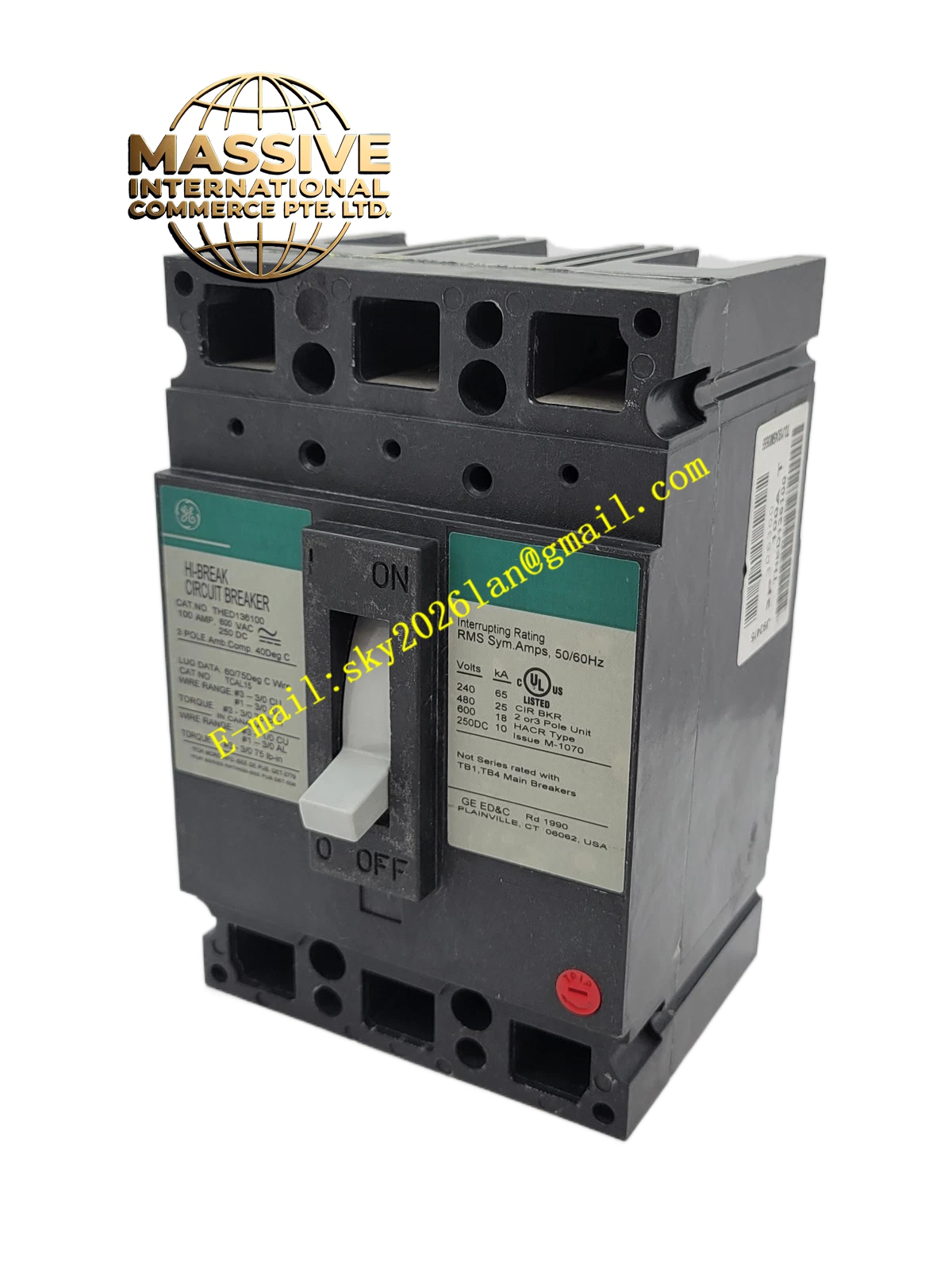
Description
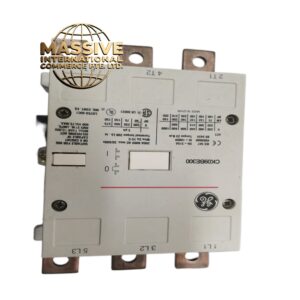
GE THED136100
Technical Specifications
- Pole Configuration: 3-Pole design for three-phase power systems.
- Rated Current: 100 Amps continuous operating current.
- Rated Voltage: 600 VAC maximum system voltage.
- Product Series: THED series molded case circuit breaker.
Functional Features
- Overcurrent Protection: Automatically interrupts electrical flow during short circuits or overload conditions to prevent equipment damage and fire hazards.
- High-Voltage Isolation: Rated for 600 VAC applications, making it suitable for industrial power distribution networks.
- Thermal-Magnetic Trip Mechanism: Provides dual protection against both prolonged overloads (thermal) and sudden short circuits (magnetic).
Application Scenarios
Widely deployed in heavy industrial manufacturing plants, commercial power distribution panels, and large-scale infrastructure electrical systems requiring robust 600VAC protection.
Performance Parameters
- Continuous Current Rating: 100 Amps.
- Maximum System Voltage: 600 Volts AC.
- Interrupting Capacity: Designed to safely clear high-energy fault currents at 600VAC.
Material Composition
The housing is constructed from high-strength, flame-retardant thermoset plastic to ensure arc containment and electrical insulation. Internal contacts utilize high-conductivity silver-alloy materials designed to withstand extreme arcing temperatures during fault interruption.
Structural Characteristics
Features a standard molded case design with a compact footprint for efficient panel space utilization. It utilizes a toggle-style manual operator for clear visual indication of ON, OFF, and TRIPPED positions.
Working Principle
Under normal conditions, the breaker’s contacts remain closed, allowing current to flow. During an overload, a bimetallic strip heats up and bends to trip the mechanism. During a short circuit, an electromagnetic solenoid generates a magnetic field that instantly forces the contacts open. The arc chute then cools and elongates the resulting electrical arc until it is safely extinguished.