


Description
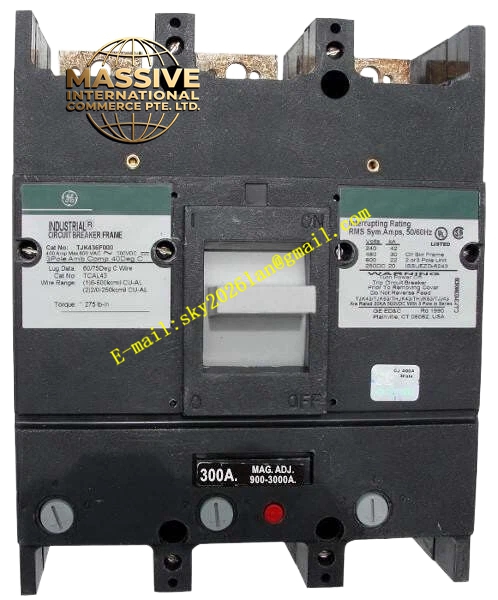
GE TJK436300
Technical Specifications
- Frame Type: TJ Series
- Poles: 3 Poles
- Amperage Rating: 400 Amperes (Standard configuration)
- Voltage Rating: 600V AC Maximum
Functional Features
- Provides precise thermal-magnetic protection against sustained overloads and instantaneous short circuits.
- Features an arc-quenching chamber for enhanced safety during fault interruption.
- Supports field-installable accessories for remote control and status monitoring.
Application Scenarios
Extensively utilized in industrial motor control centers, main power distribution panels, and heavy manufacturing facilities.
Performance Parameters
- High short-circuit interrupting capacity.
- High mechanical and electrical endurance for long-term operational reliability.
Material Composition
Housed in a high-strength, flame-retardant thermoset plastic enclosure with high-conductivity copper internal busbars and silver-alloy contacts.
Structural Characteristics
Compact molded case design with a front-accessible toggle handle for manual ON/OFF operation and visual trip indication.
Working Principle
Operates using a dual-element trip mechanism. A bimetallic strip responds to heat from prolonged overcurrent, while an electromagnetic coil generates a magnetic field during severe short circuits to instantly trip the mechanism.
Installation Requirements
- Must be mounted vertically to ensure proper thermal and mechanical operation.
- Line and load terminals must be torqued to the manufacturer’s exact specifications.
- Requires adequate clearance for ventilation and heat dissipation.
Usage Precautions
- Always verify the system is completely de-energized and locked out before installation.
- Never exceed the rated voltage or continuous current capacity.
- Perform periodic maintenance testing to verify trip calibration.