



Description
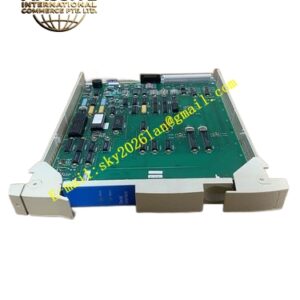
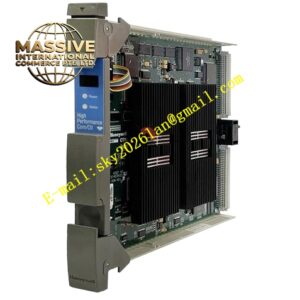
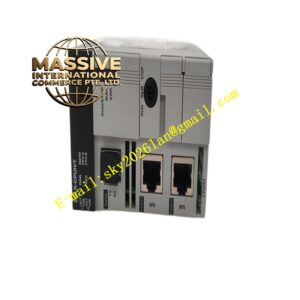
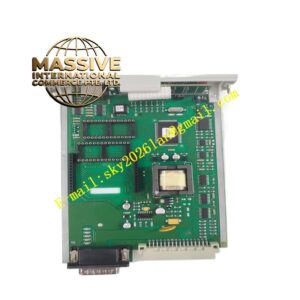
Honeywell TK-FPDXX2
Technical Specifications
- Input voltage: 85–264 VAC universal AC input
- Input frequency: 47–63 Hz
- Rated output: 24 V DC, 20 A continuous current
- Output regulation accuracy: ±1%
- Redundancy function: Dual-module parallel current-sharing redundancy
- Operating temperature: 0 °C to +60 °C
- Efficiency: 88% at full load
- Hot swap support: Online replacement for faulty power modules
Functional Features Wide-range AC input compatible with global industrial grid voltages. Dual-module parallel current sharing, output current automatically balanced between modules; one module failure causes the other to seamlessly carry full load without voltage dip. Independent overvoltage, overcurrent and overtemperature protection, automatic output shutdown on fault. On-board LEDs indicate power normal and fault alarm status. Built-in EMI filter suppresses conducted noise on the AC power line. Output hold-up time: 20 ms, no power interruption during short grid voltage dips.
Application Scenarios Cabinet internal 24 V DC supply for TPS control systems Redundant power configuration for high-reliability control systems Spare part replacement for output drift and no-output faults in legacy power modules Stable power supply for field transmitters and solenoid valve circuits Power reliability upgrade for unmanned remote station cabinets
Performance Parameters
- Output ripple: ≤50 mV peak to peak
- Current sharing imbalance: ≤5%
- Overvoltage protection threshold: 28 V DC
- Overcurrent protection threshold: 22 A
- Isolation withstand voltage: 2500 VAC for 1 minute
Material Composition Metal shielded power enclosure High-frequency switching transformer Primary side rectifier bridge Output filter inductor and capacitor bank Optocoupler feedback isolation circuit Power semiconductor switching devices Aluminum heat sink for power components AC input and DC output screw terminals
Structural Features Standard rack plug-in form factor, installed in dedicated power slots in the cabinet power compartment. Front panel houses power switch, status LEDs and fault alarm contact terminals. Metal enclosure integrates cooling fins, assisting heat dissipation for power components. Internal isolation barrier separates AC high-voltage side and DC low-voltage side. Anti-keying rail structure prevents insertion into signal I/O slots.
Working Principle AC input passes through EMI filter and rectifier circuit to convert to high-voltage DC. The high-frequency switching circuit chops the DC into high-frequency AC for transformer isolation; secondary side rectification and filtering produce regulated 24 V DC output. Feedback circuit continuously samples output voltage, adjusting switching duty cycle to maintain output accuracy. When two redundant modules run in parallel, the current sharing circuit automatically balances output current; when one module fails, the other instantly carries full load with no output voltage dip. Protection circuits monitor output voltage, current and internal temperature; parameters exceeding thresholds trigger output shutdown and fault alarm.
Installation Requirements Install two redundant power modules in adjacent slots in the power compartment. Connect AC input wiring securely, ground the metal enclosure to cabinet protective ground. Connect DC output positive and negative terminals to the cabinet 24 V power bus. Measure output voltage after power-up, confirm regulation accuracy meets specification. Connect current-sharing communication wires between the two modules for redundant configuration.
Usage Notes Total cabinet load current must not exceed the 20 A rating of a single module; overload triggers over-temperature protection. When replacing a faulty module, no need to disconnect load power; redundant systems support online hot swap. Never block module ventilation openings with cabling; poor ventilation triggers overtemperature protection. Never short-circuit DC output terminals, short circuit damages power semiconductors.