


Description
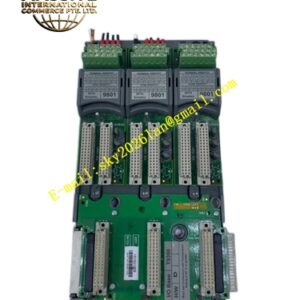
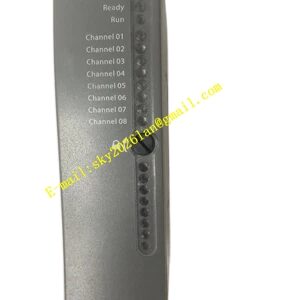
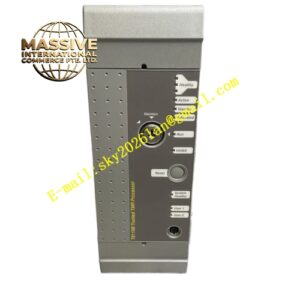
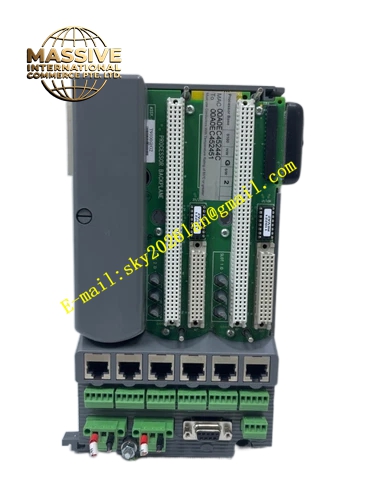
ICS Triplex T3151
Technical Specifications
| Parameter | Specification |
|---|---|
| Manufacturer | ICS Triplex (Rockwell Automation) |
| Product Series | Regent System |
| Module Type | Communication Control Module |
| Integrated Functions | Real-time clock, serial communication, TMR support |
| Redundancy Architecture | Triple Modular Redundancy (TMR) capable |
| Communication Protocol | RS232 |
| Operating Temperature | 0°C to 60°C |
Functional Features
- Real-Time Clock Integration: Built-in clock circuit provides time-stamping for events, alarms, and diagnostic records
- TMR Functionality: Supports triple modular redundancy for high-availability communication paths
- Serial Communication: RS232 interface for connection to programming tools and external systems
- High Programmability: Configurable communication parameters and clock synchronization settings
- Seamless System Integration: Designed for native integration with other Regent system components
- Precise Output Frequency Control: Stable clock source ensures accurate timing for event sequencing
Application Scenarios
- Industrial control systems requiring time-stamped event logging
- Safety instrumented systems with synchronized multi-node operation
- Process automation in chemical and petrochemical industries
- Power generation control and monitoring
- Water treatment plant automation
- Wind power system control
- Tunnel ventilation equipment management
- Medical environment alarm systems
- Greenhouse lighting and ventilation control
Performance Parameters
- Clock Accuracy: High-precision real-time clock maintains accurate timekeeping across power cycles
- Event Resolution: Time-stamping capability supports millisecond-level event recording
- Communication Speed: Standard RS232 baud rates for reliable data exchange
- Redundancy Performance: TMR architecture prevents single-point communication failures
Material Composition
- Enclosure: Industrial-grade metal housing with protective finish
- Circuit Board: Multilayer PCB with clock oscillator and communication circuits
- Clock Components: Temperature-compensated crystal oscillator for timekeeping accuracy
- Connectors: High-reliability backplane and field communication connectors
Structural Characteristics
- Standard Regent Form Factor: Compatible with Regent controller chassis slots
- Front-Panel Access: Communication port and status indicators on the front panel
- Backplane Interface: Direct connection to the Regent internal system bus
- Compact Design: Space-efficient module footprint for high-density installations
Working Principle
The T3151 module operates as the communication and timing hub within the Regent system. The real-time clock circuit maintains continuous timekeeping using a dedicated oscillator and backup power source. The communication processor manages RS232 data exchange between the Regent controller and external devices. In TMR configurations, three independent T3151 modules operate simultaneously, with their outputs cross-checked to ensure only valid time-stamped data is recorded and transmitted.
Installation Requirements
- Install in a designated communication slot in the Regent chassis
- Connect the RS232 cable to the front-panel port using shielded wiring
- Configure clock settings and time synchronization via system software
- Ensure proper chassis grounding
- Verify TMR configuration settings when installing redundant modules
Operating Precautions
- Verify real-time clock accuracy during system commissioning
- Maintain backup power for the clock circuit during main power outages
- Monitor communication status for fault indication
- Replace failed modules promptly in TMR configurations to restore redundancy
- Synchronize clocks across all T3151 modules in redundant configurations
- Follow proper ESD procedures during module handling