


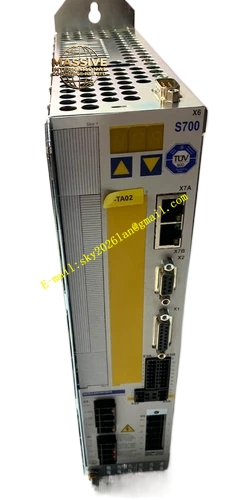
Description
Kollmorgen S70302-NANANA
Technical Specifications:
- Series: SERVOSTAR S700
- Peak Power: 2.2kVA
- Continuous Output Power: 1.8kVA
- Current Modes: 15A/30A dual current mode switching
- Communication: EtherCAT, CANopen, Modbus TCP/IP, SynqNet 2.0
- Bus Refresh Cycle: Minimum 250μs
- SynqNet 2.0 Nodes: Up to 127 nodes per single link
- Feedback Compatibility: Hiperface DSL, EnDat 2.2, BiSS-C
- Encoder Resolution: 24-bit absolute encoder parsing capability
- Rated Mains Voltage: 3×208V to 3×480V, 50/60Hz
- Rated Output Current (S703): 5A RMS at 208V, 4A at 230V, 3A at 400V/480V
- Peak Output Current (S703): 9A RMS
Functional Features:
- Full-domain adaptive control with built-in dynamic stiffness compensation algorithm
- Automatic control bandwidth adjustment across 0.1Hz to 3kHz frequency range
- Fault ride-through technology with dual-loop redundancy design
- Backup loop seamless switchover within 1ms when primary control loop encounters anomalies
- Innovative thermal management with立体散热矩阵 (3D heat dissipation matrix) reducing thermal resistance to 0.15°C/W
- Full-power operation at 45°C ambient temperature
- Autotuning functionality
- Cogging suppression
- Optimized resolver interface
- IEC 61131 macro programming language integrated
- MMC memory card slot for parameter and firmware backup
Application Scenarios:
- Semiconductor equipment: wafer transfer systems achieving 0.1μm positioning accuracy via Hiperface DSL
- Medical robotics: orthopedic surgical robots with 0.02mm positioning accuracy and 12kHz control bandwidth
- Precision machining: five-axis machining centers with 12-axis synchronization error below 0.005°
- New energy: hydrogen fuel cell stack assembly equipment maintaining ±0.01mm stacking accuracy during grid fluctuations
Performance Parameters:
- Voltage Fluctuation Compensation Response: Less than 0.5ms
- Position Response Time: Reduced from 25ms to 8ms with dynamic stiffness compensation
- MTBF: Improved from 12,000 hours to 38,000 hours with advanced thermal management
- Multi-Axis Synchronization: 12-axis synchronization error below 0.01° in collaborative robot applications
- Control Loops: High-speed current, speed, and position control
Material Composition:
- Industrial-grade electronic components
- Dual DC/DC conversion modules
- Advanced heat dissipation matrix structure
- Modular PCB design
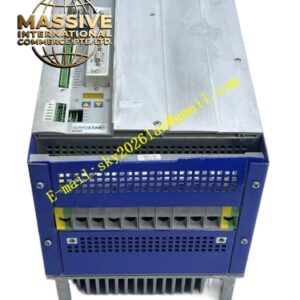
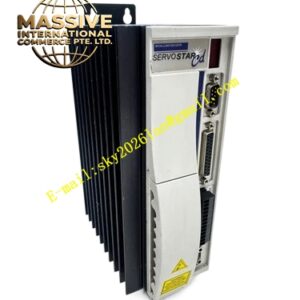
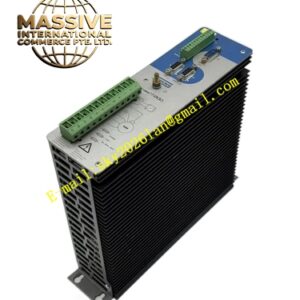
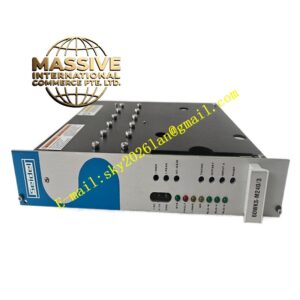
Structural Features: Compact modular design with integrated EMC filters, power supply, and brake resistor. Features MMC memory card slot, multiple communication ports, and connector interfaces. LED indicators display RUN/FAULT/COMM status.
Working Principle: The drive operates as a high-performance digital servo amplifier using advanced control algorithms. The integrated dynamic stiffness compensation algorithm automatically adjusts control bandwidth across the full frequency range. The dual-loop redundancy design ensures that when the primary control loop encounters anomalies, the backup loop completes seamless switchover within 1ms. The drive supports multiple feedback protocols and communication interfaces for flexible system integration.
Installation Requirements:
- Install in a clean, dry environment free from silicone oil contamination (concentration must remain below 50ppm)
- Ensure proper ESD protection during handling
- Mount with adequate clearance for thermal dissipation
- Use shielded cables for all power and feedback connections
Usage Precautions:
- Wear ESD anti-static wrist straps before handling; ESD protection rating supports only ±2kV contact discharge
- Never hot-plug communication cables; doing so causes all EtherCAT bus nodes to go offline
- Use only genuine WorkBench software for parameter modifications; cracked software causes current loop parameter anomalies
- Check LED indicator status regularly: FAULT LED flashing once per second indicates encoder feedback anomaly, three times per second indicates overvoltage protection
- Use infrared thermal imaging to monitor heatsink temperature; normal operating temperature should remain below 65°C
- Clean heatsink fins quarterly; monthly in metal dust environments
- Replace CFast storage card every 2 years to prevent parameter loss from flash wear
- Monitor EtherCAT bus load rate; optimize node distribution when load exceeds 70%