


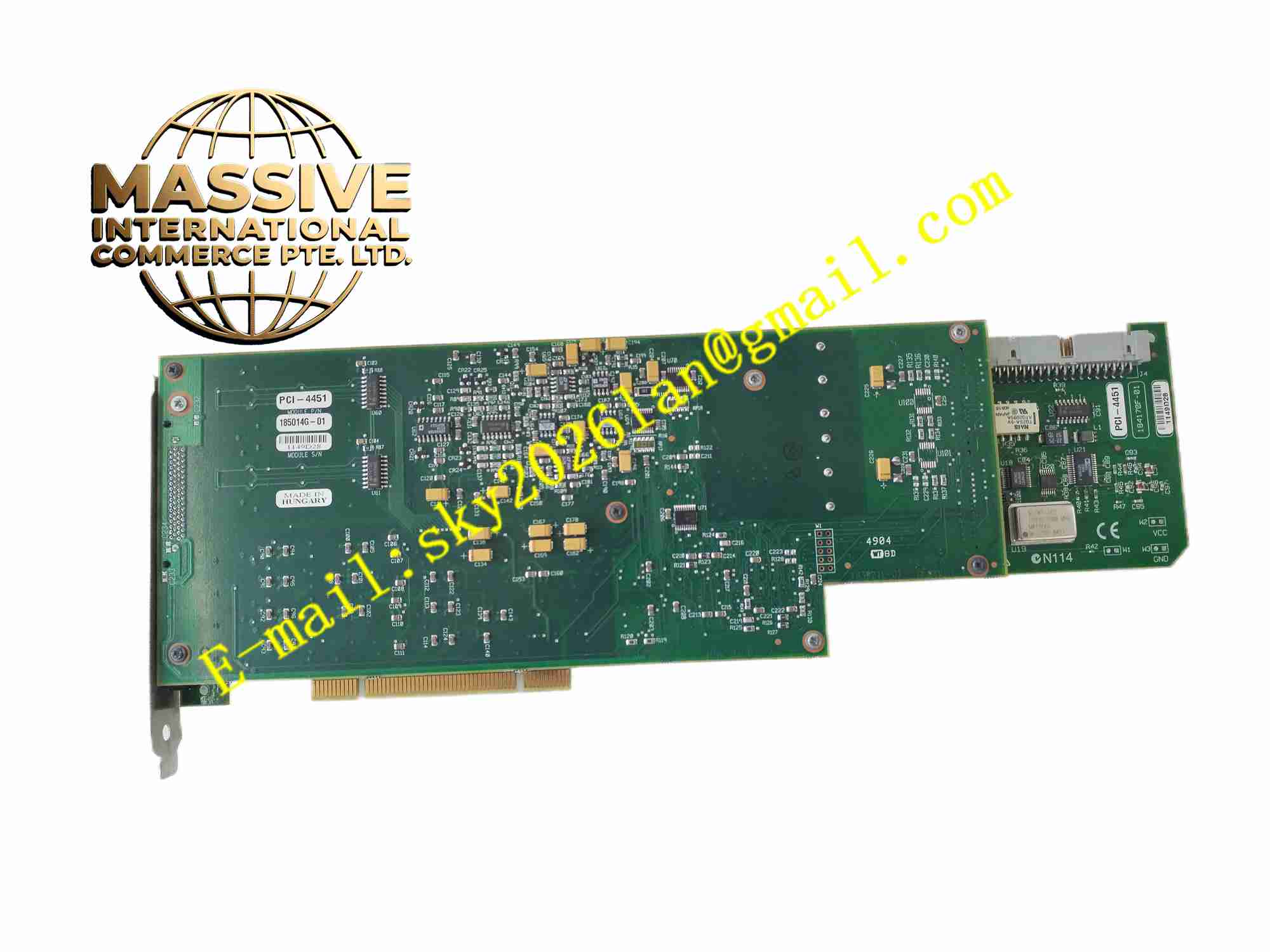
Description
NI PCI-4451
Technical Specifications: Bus interface: Standard PCI bus Analog input channels: 2 differential analog input channels Analog output channels: 2 analog output channels ADC resolution: 24-bit DAC resolution: 24-bit Maximum sampling rate: 204.8 kS/s simultaneous sampling Input signal range: ±10 V Built-in anti-aliasing filter for each analog input channel Power supply: Supplied from PCI slot of host PC Operating temperature range: 0℃ ~ +55℃ Storage temperature range: -40℃ ~ +85℃ Relative humidity: 5% to 90%, non-condensing Form factor: Full height PCI add-on card, BNC connectors on bracket Protection grade: IP20
Functional Features: 24-bit high resolution for low-level dynamic signal measurement and waveform generation. Simultaneous sampling of two input channels and synchronous waveform output on two output channels. Hardware anti-aliasing low-pass filters integrated for each analog input channel. Differential input design to suppress common-mode noise for weak acoustic and vibration signals. Support continuous streaming of sampled data to host PC memory. NI-DAQmx driver support and LabVIEW programming environment compatibility. BNC connectors for direct connection with piezoelectric sensors, microphones and signal measurement probes. Onboard calibration circuit for accurate signal measurement and output. Hardware self-test and diagnostic function after power on.
Application Scenarios: Acoustic noise testing, vibration modal analysis, audio device performance measurement, microphone calibration, mechanical structure resonance test, engine noise measurement, laboratory dynamic signal test bench, speaker frequency response test.
Performance Parameters: Ultra low total harmonic distortion for high fidelity signal measurement and generation. High signal to noise ratio for capturing weak vibration and acoustic signals. Synchronous multi-channel sampling with accurate phase alignment between channels. Continuous streaming data transmission without data loss within host memory limit. High stability of gain and offset after onboard self-calibration.
Material Composition: PCB substrate: Multi-layer FR4 glass fiber epoxy printed circuit board. Core components: 24-bit ADC, 24-bit DAC, anti-aliasing filter array, PCI interface controller, precision reference voltage chip. Mechanical bracket: Steel full height PCI mounting bracket. Connectors: Metal shell BNC connectors with gold-plated center contacts.
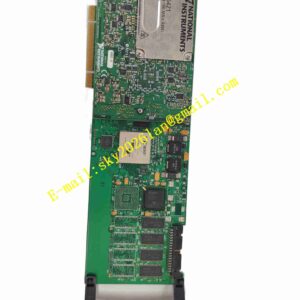
Structural Features: Standard full height PCI add-on card structure. Steel mounting bracket fitted with four BNC connectors for analog input and analog output. Internal circuit divided into PCI host bus interface area, ADC acquisition area, DAC waveform generation area and analog filter area. Precision analog signal ground separation to reduce noise interference. Gold plated PCI edge connector for insertion into industrial or laboratory PC PCI slot.
Working Principle: PCI-4451 receives power supply from PCI bus after being inserted into PC PCI slot. NI-DAQmx driver initializes card hardware after system boot. External dynamic analog signals from microphones or vibration sensors are fed into BNC input connectors. Signals pass through hardware anti-aliasing filter before entering 24-bit ADC converter. ADC converts continuous analog waveform into digital sampling data and transfers data to PC memory over PCI bus. For waveform generation, host software downloads waveform data to onboard buffer, DAC converts digital waveform data into continuous analog output signal from BNC output ports. Onboard reference voltage chip supports automatic self-calibration to correct gain and offset error.
Installation Requirements: Power off host PC before installing PCI-4451 card. Remove chassis rear slot cover, insert card into empty PCI slot and fasten steel bracket screw. Install NI-DAQmx driver software and LabVIEW programming environment on host PC. Connect measurement sensors and signal output cables to BNC connectors. Run NI measurement and automation explorer to perform onboard self-calibration and hardware test. Configure sampling rate, input range and filter parameters in measurement project. Connect PC chassis protective earth to reliable grounding point. Use 50-ohm or high-quality shielded coaxial BNC cables for signal wiring.
Usage Notes: Complete self-calibration before starting precision measurement tasks. Use shielded BNC coaxial cables to reduce external electromagnetic noise. Wear anti-static wristband during card installation and handling. Backup LabVIEW measurement project before modifying sampling configuration. Do not apply signal voltage exceeding ±10V input range to BNC input ports. Do not operate card outside rated temperature and humidity range. Prevent dust and debris entering BNC connector ports.