


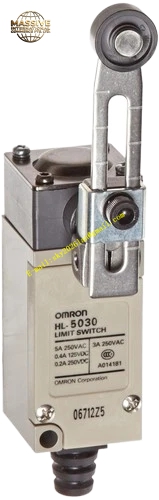
Description
OMRON HL‑5030
Technical Specifications: Contact form SPDT; rated contact capacity AC250V 5A, DC30V 0.4A; mechanical service life ≥10 million operations; electrical service life ≥500 000 operations under rated resistive load; protection grade IP64; operating temperature ‑10‑80°C; storage temperature ‑25‑85°C; screw terminal connection; horizontal roller lever actuator; weight approx 135g.
Functional Features: Horizontal roller‑lever actuator reduces friction damage from mechanical sliding contact; SPDT contact simultaneously outputs NO and NC signals; robust internal metal transmission mechanism; IP64 dust‑splash protection; compact housing structure; convenient screw‑terminal wiring; compatible with most mechanical stroke‑control scenarios.
Application Scenarios: Machine‑tool feed‑axis stroke limit; conveyor mechanical position detection; automated production‑line trolley position sensing; packaging machinery stroke control; safety interlock signal collection for mechanical equipment.
Performance Parameters: Compliant with IEC60947‑5‑1 standard; good anti‑vibration and anti‑shock performance for mechanical equipment operating conditions; consistent contact switching performance under rated load.
Material Composition: Flame‑retardant high‑strength engineering‑plastic housing; zinc‑alloy lever and roller components; silver‑alloy electrical contact points; brass nickel‑plated screw terminals; internal metal spring reset mechanism.
Structural Features: Compact main housing; horizontal outward‑extending roller‑lever actuator assembly; built‑in spring‑reset mechanical linkage; front‑side screw‑type wiring terminals; fixed mounting holes on housing base.
Working Principle: Moving mechanical component presses against the roller wheel of HL‑5030. Force transfers through lever to internal linkage mechanism, driving internal silver‑alloy contacts to complete switching action between normally‑open and normally‑closed circuits. When external mechanical pressure disappears, internal reset spring drives lever and contacts back to initial state.
Installation Requirements: Fasten switch body reliably to mechanical mounting base; adjust triggering position to guarantee proper over‑travel after actuation; make sure roller wheel contacts mechanical cam surface smoothly; wiring cables avoid applying pulling force to switch terminals.
Usage Notes: Contact load shall not exceed rated voltage and current limits; avoid violent impact on roller‑lever assembly; regularly check lever deformation and contact abrasion under high‑frequency working conditions; forbid application in corrosive‑gas or continuous‑immersion environments.