


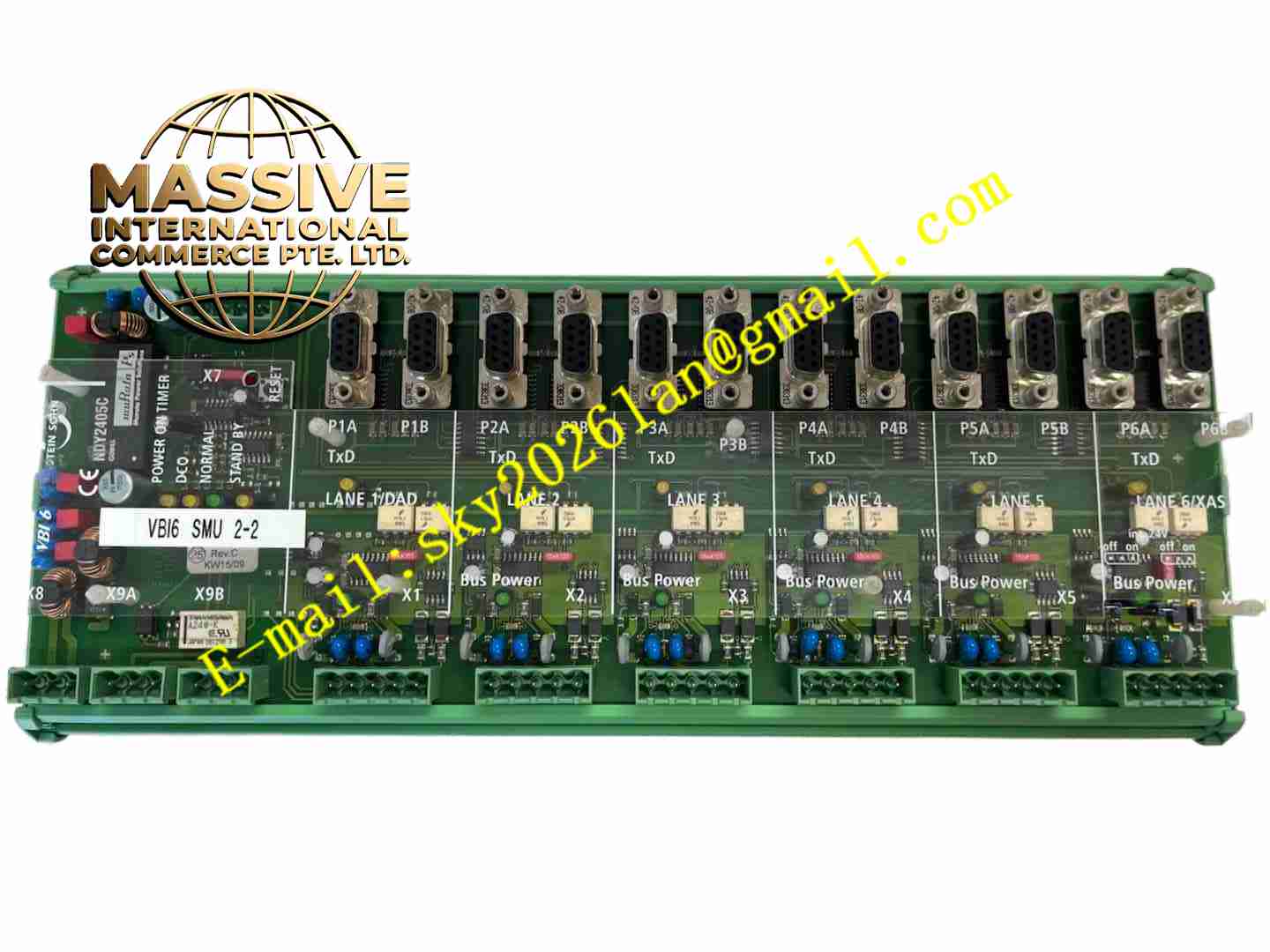
Description
STEIN SOHN VISTA F404002A
Technical Specifications
- Product Type: Marine analog input module
- Channel Configuration: Multi-channel analog input
- Input Signal: 4-20mA standard analog current signal
- Marine Certification: DNV, GL marine approval
- Communication Bus: VISTA internal field bus
- Diagnostic Functions: Cable break, short circuit and signal range fault detection
- Protection Rating: IP20 for cabinet installation
- Operating Temperature: -20 °C to +70 °C
- Mounting Method: DIN rail rack mounting inside marine control cabinet
Functional Features
- Multi-channel 4-20mA analog signal acquisition for marine tank transmitters.
- Continuous channel diagnosis detects wiring break and short circuit on field loops.
- Marine grade circuit design withstands vessel vibration, humidity and temperature fluctuation.
- Converts analog measurement signal into digital data for VISTA central monitoring unit.
- Built-in surge protection suppresses electrical transient interference from marine power grid.
- LED indicators display module power, communication status and channel fault alarm.
- Supports remote parameter configuration via VISTA monitoring software.
- Fault data uploads to central unit for alarm display and event recording.
- Galvanic isolation between field sensor circuit and internal communication bus.
- Low power consumption design reduces heat generation inside marine cabinet.
Application Scenarios
- Cargo tank level monitoring system for oil tankers and chemical carriers
- Ballast tank liquid level and pressure monitoring for merchant vessels
- Offshore platform tank liquid parameter measurement system
- Ship engine room auxiliary tank temperature and pressure monitoring
- Marine vessel liquid cargo calculation and inventory management system
Material Composition
- Housing: Reinforced flame-retardant polycarbonate plastic casing
- Main PCB: FR4 marine grade printed circuit board with conformal coating
- Conversion chips: High precision analog-to-digital converter ICs
- Isolation components: Marine grade optocoupler isolation chips
- Terminal block: Copper alloy spring cage terminals resistant to salt mist corrosion
- Bus connector: Gold-plated copper contact pins
Structural Characteristics
- Compact DIN rail modular structure for marine control cabinet installation.
- Front panel carries LED indicators for module and channel working status.
- Lower terminal block for field tank sensor wiring connection.
- Internal circuit layout separates field measurement circuit and communication circuit.
- Reinforced PCB soldering structure resists continuous ship vibration.
- Conformal coating covers entire PCB surface to resist salt mist and humidity corrosion.
Working Principle 4-20mA analog signals from tank level and pressure transmitters enter module input channels. The module samples analog signals and converts analog values to digital data. Internal diagnostic circuit monitors loop current continuously to detect wiring failure. Valid measurement data is transmitted to VISTA central monitoring unit via dedicated marine field bus. When fault is detected, the module triggers LED alarm and sends fault information to central monitoring station.
Installation Requirements
- Mount module on standard DIN rail inside marine control cabinet.
- Use marine approved shielded twisted pair cable for field sensor wiring.
- Separate signal cables from high current power and motor cables on vessel cable tray.
- Complete protective earth connection for cabinet and module housing.
- Avoid installation location with direct salt spray exposure.
- Configure channel parameters in VISTA monitoring software after wiring.
- Perform loop fault simulation test before vessel commissioning.
Usage Notes
- Do not operate module outside specified marine temperature range.
- Do not apply overvoltage to analog input terminals.
- Maintain cabinet sealing to prevent salt mist entering internal circuit.
- Check terminal block tightness periodically under vessel vibration condition.
- Disconnect field wiring before insulation test.
- Replace module immediately if permanent hardware fault occurs.
- Perform regular calibration of measurement channels according to vessel maintenance schedule.