


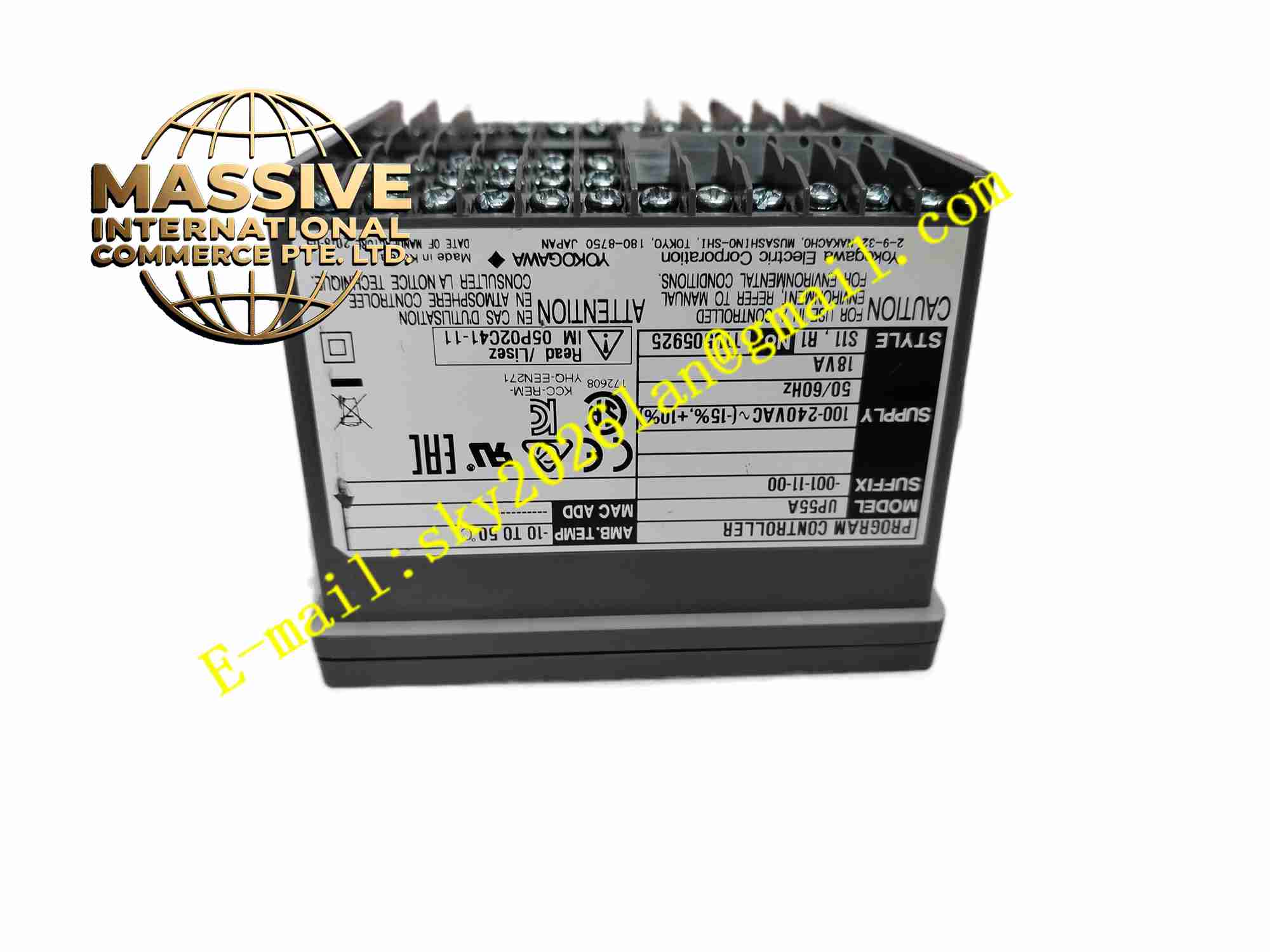
Description
YOKOGAWA UP55A-001-11-00
Technical Specifications Input signal types: Thermocouple, RTD, DC voltage, DC current analog input; Control output: Relay, voltage pulse or 4-20mA analog selectable; Power supply AC100-240V; Operating temperature -10°C to +50°C; Display: High contrast LCD screen; Maximum program segments: 300 segments; Sampling cycle 200ms; Communication option Modbus RTU.
Functional Features Multi-segment program ramp soak function supports linear rise, constant hold and linear fall profiles; Built-in auto-tuning PID algorithm to optimize control parameters automatically; Multiple recipe storage allows quick recipe recall for different product batches; Upper and lower limit alarm function for process variable deviation; Manual / automatic mode seamless switch; Event output triggers external equipment at specified program segments; Password protection prevents unauthorized modification of program recipes.
Application Scenarios Laboratory thermal test furnaces; Industrial oven and drying equipment; Pharmaceutical lyophilization process; Ceramic sintering furnace; Environmental temperature cycling test chambers; Plastic material heat aging test equipment.
Performance Parameters Measurement accuracy reaches ±0.1% of full scale; Control stability maintains small deviation during constant temperature holding stage; Program segment switching has no overshoot under normal tuning; Sampling timing keeps high precision; Alarm trigger response is fast.
Material Composition Flame-retardant plastic front panel; Metal rear housing; Glass fiber PCB control board; LCD display module; Tactile operation keys; Relay output components; Screw terminal block; Circuit board conformal coating.
Structural Features Panel embedded mounting design; Front panel with LCD display and operation keys; LED alarm status indicator on front face; Rear terminal block for sensor input, control output, power and alarm wiring; IP66 protection grade on front panel against dust and splash.
Working Principle The controller receives process measurement signal from temperature or pressure sensor. It compares measured value with program setpoint value changing along pre-defined time sequence. PID algorithm calculates output value to adjust heater, valve or other actuators. When running program profile, setpoint changes according to pre-programmed ramp and soak segments. If process variable exceeds configured threshold, alarm signal is activated and event digital output is triggered at specified program steps.
Installation Requirements Install through panel cutout inside control cabinet; Sensor signal cable adopts shielded wire; Power wiring separate from low-level sensor wiring; Front panel seal gasket must be installed completely to maintain protection rating; Keep enough ventilation space around controller rear side.
Precautions for Use Do not apply over-range input signal to measurement terminals; Calibrate input channel periodically according to standard instrument; Set password protection for production recipes; Avoid strong vibration at installation position; Cut power before replacing internal components.