


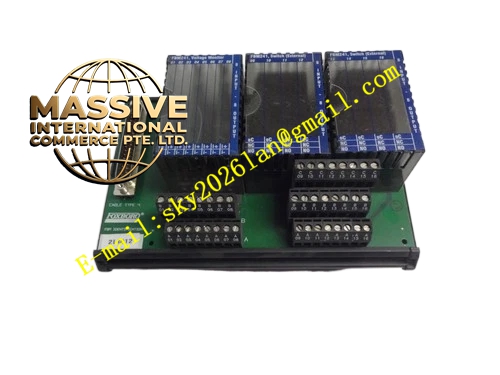
Description
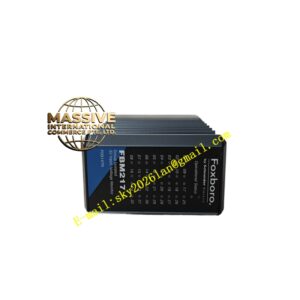
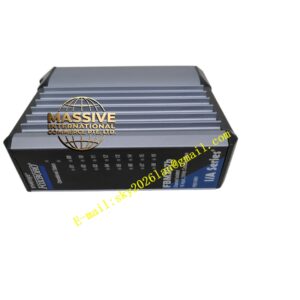
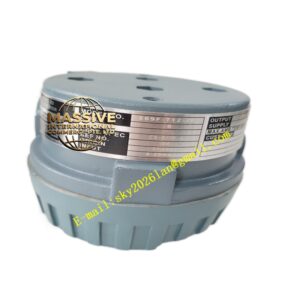
Foxboro P0916PH
Technical Specifications
- Module Series: Foxboro I/A Series 200 FBM.
- Signal Types: Supports standard industrial signals (4-20mA, 0-10V, 24VDC).
- Communication: Compatible with proprietary Foxboro fieldbus protocol.
Functional Features
- Signal Conditioning and Isolation: Built-in high-precision circuits with galvanic isolation to prevent ground loops and common-mode interference.
- Self-Diagnostics: Comprehensive fault detection including wire break, over-range, and module failure alarms.
- Hot-Swappable: Supports online replacement to minimize process downtime.
Application Scenarios
Applicable in chemical, power, and metallurgical industries for monitoring temperatures, pressures, and flows, as well as controlling valves and motor starters.
Applicable in chemical, power, and metallurgical industries for monitoring temperatures, pressures, and flows, as well as controlling valves and motor starters.
Performance Parameters
- Accuracy: Typical accuracy of 0.1% or better.
- Response Time: Millisecond-level signal update cycle.
- Environment: 0°C to 60°C operating range, G3 harsh environment compliant.
Material Composition
Industrial-grade electronic components on conformal-coated PCBs. Housed in a flame-retardant engineering plastic enclosure.
Industrial-grade electronic components on conformal-coated PCBs. Housed in a flame-retardant engineering plastic enclosure.
Structural Characteristics
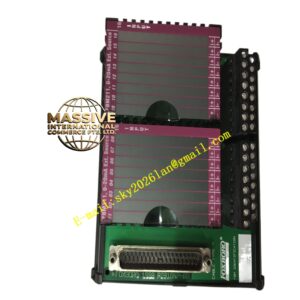
Compact modular design with clear channel labeling and status LEDs. Rear connector mates precisely with the Field Terminal Assembly (FTA).
Compact modular design with clear channel labeling and status LEDs. Rear connector mates precisely with the Field Terminal Assembly (FTA).
Working Principle
Receives configuration from the controller, samples field signals, performs A/D conversion with linearization and filtering, and transmits digital data over the fieldbus. For outputs, it converts digital commands to analog currents or discrete switching signals.
Receives configuration from the controller, samples field signals, performs A/D conversion with linearization and filtering, and transmits digital data over the fieldbus. For outputs, it converts digital commands to analog currents or discrete switching signals.
Installation Requirements
Must be paired with the correct FTA. Use shielded twisted-pair cables for analog signals, grounded at the FTA only.
Must be paired with the correct FTA. Use shielded twisted-pair cables for analog signals, grounded at the FTA only.
Usage Precautions
- Do not hot-swap unless the system explicitly supports it and procedures are followed.
- Verify signal polarity before energizing to prevent module damage.
- Monitor status LEDs regularly for early fault detection.