


Description
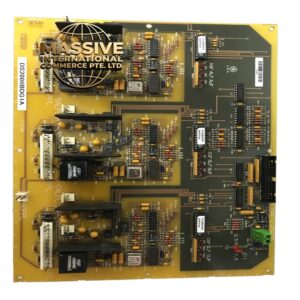
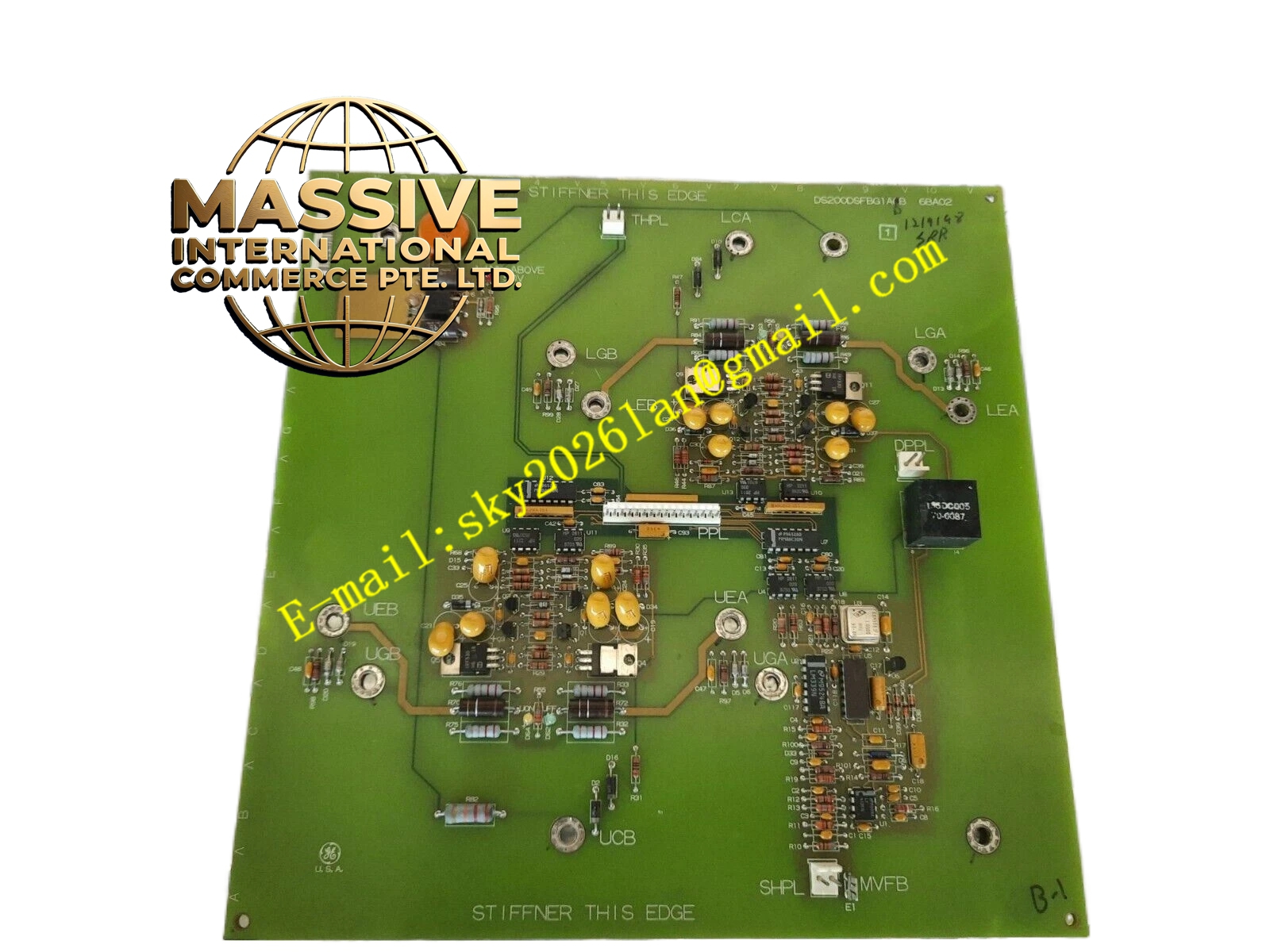
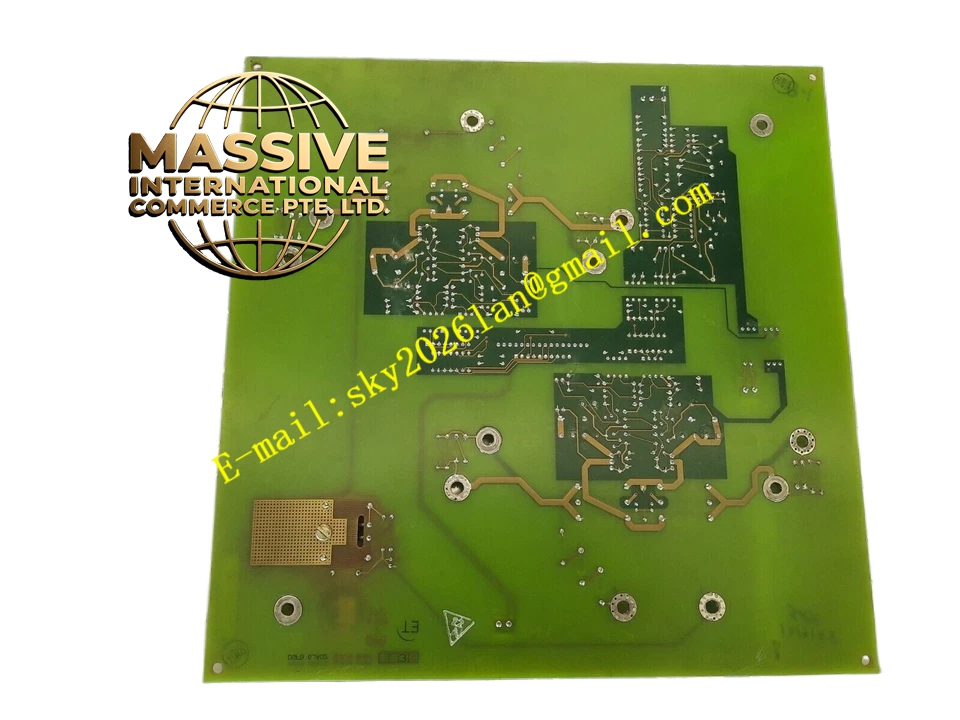
GE DS200DSFBG1ACB6BA02
Technical Specifications
- Product Type: RST Analog I/O Board (TCQA).
- System Compatibility: GE Mark V Turbine Control System.
- Signal Processing: Handles LVDT inputs, servo valve outputs, thermocouple inputs, 4-20 mA signals, vibration inputs, and generator/line signals.
- Connectors: Features multiple specialized connectors including 2PL, 3PL, JE, JF, JG, JD, JAR/S/T, and JBR.
Functional Features
- Signal Conditioning: Scales and conditions 4-20 mA input signals, such as compressor stall detection and fuel flow pressure.
- Data Bus Communication: Transmits conditioned signals to the COREBUS via the 3PL connector.
- Generator & Line Signaling: Utilizes the JE connector to send and receive generator and line signals, pulse signals, and servo valve driver outputs with the TCQC board.
- Hardware Configuration: Includes hardware jumpers (J1, J2, J5, J6, J7, J8) for configuring milliamp output circuits, current ranges (20 mA or 200 mA), RS232 card testing, and oscillator startup.
Application Scenarios
- Power Generation: Essential for the precise control and monitoring of heavy-duty industrial gas turbines in power plants.
- Mechanical Drive: Applied in oil and gas pipeline compressor stations requiring high-reliability turbine control.
Performance Parameters
- Signal Accuracy: High-precision analog scaling and conditioning for real-time turbine regulation.
- Reliability: Engineered for continuous, fault-tolerant operation in critical power generation environments.
Material Composition
- Substrate: Industrial-grade multi-layer printed circuit board (PCB).
- Components: High-reliability precision analog integrated circuits and discrete components.
Structural Characteristics
- Form Factor: Standard Mark V series board dimensions.
- Connectivity: High-density backplane and front-panel connectors tailored for extensive field wiring.
Working Principle
The board receives raw analog signals from field sensors via terminal boards. It scales and conditions these signals (e.g., converting 4-20 mA signals to usable voltage levels) and routes them through the 3PL data bus to the core processors. Conversely, it receives digital control commands and converts them to analog outputs to drive servo valves and actuators.