


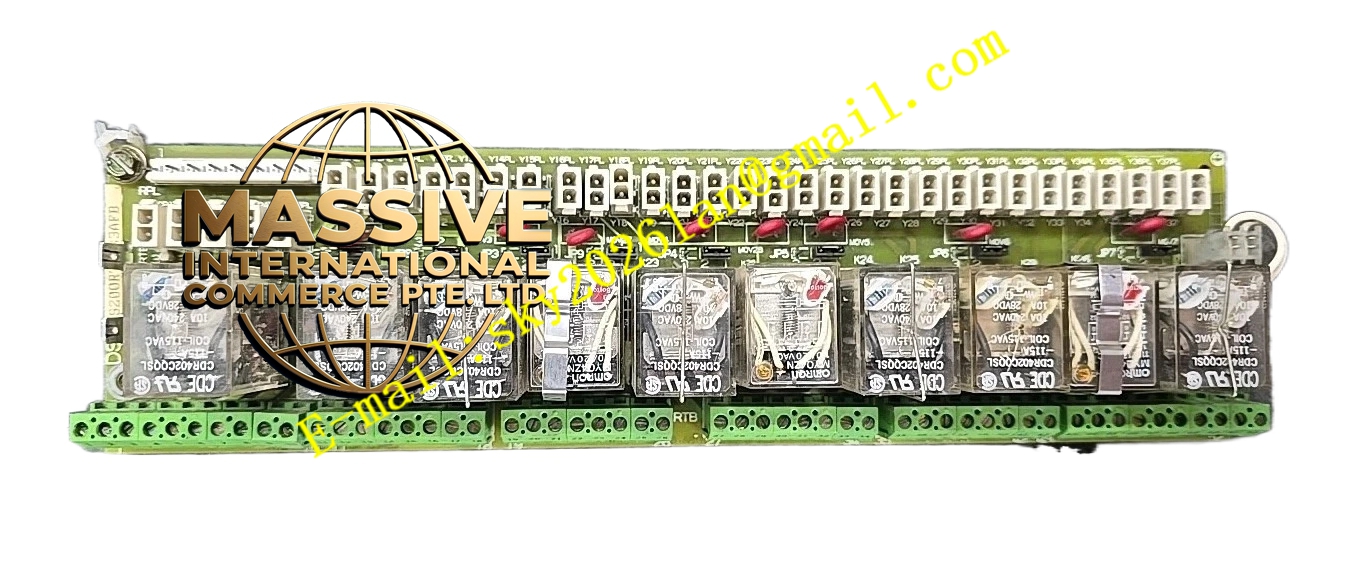
Description
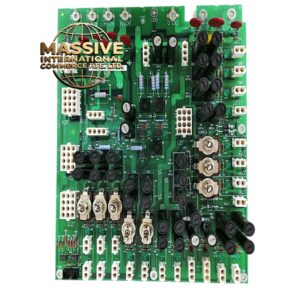
GE DS200RTBAG1A
Technical Specifications
- Product Type: Relay Terminal Board.
- System Compatibility: GE Mark V / EX2000.
- I/O Type: Relay Outputs.
Functional Features
- Signal Isolation: Provides galvanic isolation between sensitive control electronics and high-power field devices.
- Switching: Executes control commands by opening or closing relay contacts.
- Field Wiring Interface: Provides accessible terminal blocks for connecting external actuators, alarms, and indicators.
Application Scenarios
Deployed in power generation plants for interfacing turbine control logic with external plant equipment, such as fuel valves, cooling fans, and alarm systems.
Performance Parameters
- Relay Contact Rating: Designed to handle specific industrial voltage and current loads.
- Response Time: Fast mechanical switching for real-time control.
Material Composition
- PCB: High-reliability industrial-grade printed circuit board.
- Relays: Industrial-grade electromechanical relays with high cycle life.
Structural Characteristics
- Form Factor: Standard terminal board designed for rack or panel mounting.
- Connectors: Front-facing screw terminals for field wiring and rear connectors for backplane integration.
Working Principle
Receives low-voltage control signals from the main processor board, energizes the corresponding relay coils, and switches the high-power contacts to control external field devices.
Installation Requirements
- Must be securely mounted and connected to the corresponding control board via ribbon cables.
- Field wiring must be properly torqued to prevent loose connections.
Usage Precautions
- Always de-energize the system before wiring or replacing the board.
- Verify the relay contact ratings match the connected field load.