


Description
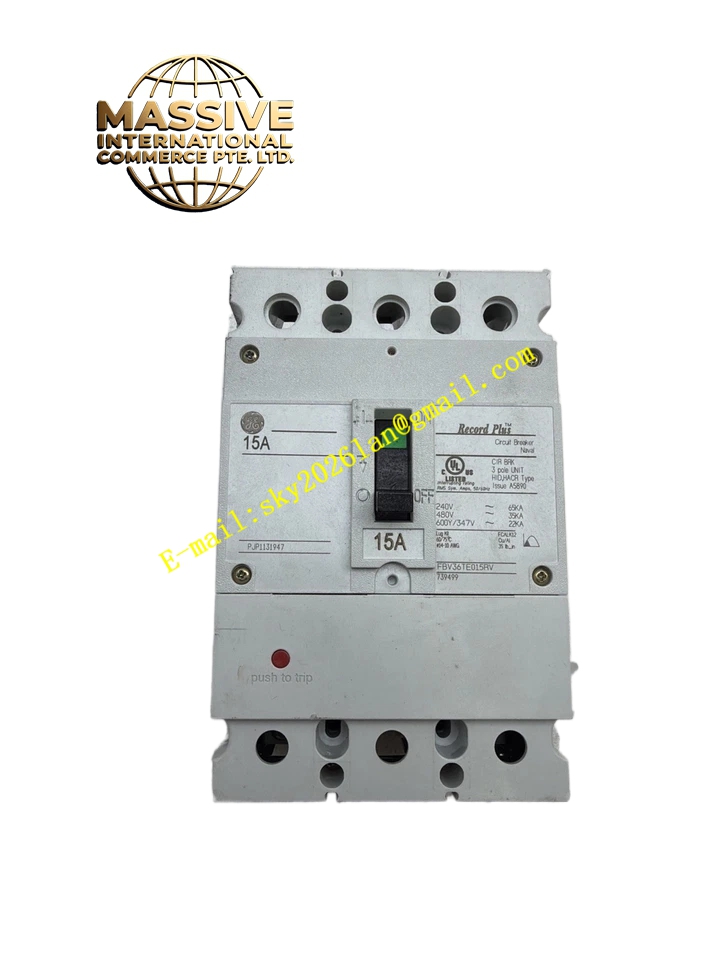
GE FBL36TE020RV
Technical Specifications
- Poles: 3-Pole.
- Trip Mechanism: Thermal-Magnetic.
- Frame Type: Industrial heavy-duty frame.
- Voltage Rating: Suitable for standard industrial AC voltage classes.
Functional Features
- Dual Protection: Thermal element protects against sustained overloads; magnetic element provides instantaneous short-circuit protection.
- Manual Disconnect: Serves as a safe, visible means of isolating equipment for maintenance.
- High Interrupting Capacity: Safely clears high-magnitude fault currents.
Application Scenarios
Used in industrial panelboards, motor control centers, commercial building distribution, and heavy machinery power feeds.
Used in industrial panelboards, motor control centers, commercial building distribution, and heavy machinery power feeds.
Performance Parameters
- Interrupting Rating: High short-circuit current rating (kAIC) for industrial fault levels.
- Mechanical Life: Thousands of manual make/break operations.
- Trip Accuracy: Precision-calibrated thermal and magnetic elements.
Material Composition
High-strength, flame-retardant thermoplastic housing, silver-alloy contacts, bimetallic thermal strips, and electromagnetic trip coils.
High-strength, flame-retardant thermoplastic housing, silver-alloy contacts, bimetallic thermal strips, and electromagnetic trip coils.
Structural Characteristics
Compact molded case design with an external toggle handle, mechanical trip indicator window, and standardized line/load terminal connections.
Compact molded case design with an external toggle handle, mechanical trip indicator window, and standardized line/load terminal connections.
Operating Principle
Under normal conditions, current flows through closed contacts. Prolonged overcurrent heats the bimetallic strip, causing it to bend and trip. High-magnitude short circuits generate magnetic force that instantly releases the trip mechanism.
Under normal conditions, current flows through closed contacts. Prolonged overcurrent heats the bimetallic strip, causing it to bend and trip. High-magnitude short circuits generate magnetic force that instantly releases the trip mechanism.
Installation Requirements
Install in accordance with NEC and local electrical codes. Torque all terminal connections to manufacturer specifications. Ensure adequate clearance for arc flash safety.
Install in accordance with NEC and local electrical codes. Torque all terminal connections to manufacturer specifications. Ensure adequate clearance for arc flash safety.
Usage Precautions
Never operate beyond rated voltage or current. Test the trip mechanism periodically. Replace the breaker if it has operated under a major fault condition.
Never operate beyond rated voltage or current. Test the trip mechanism periodically. Replace the breaker if it has operated under a major fault condition.