


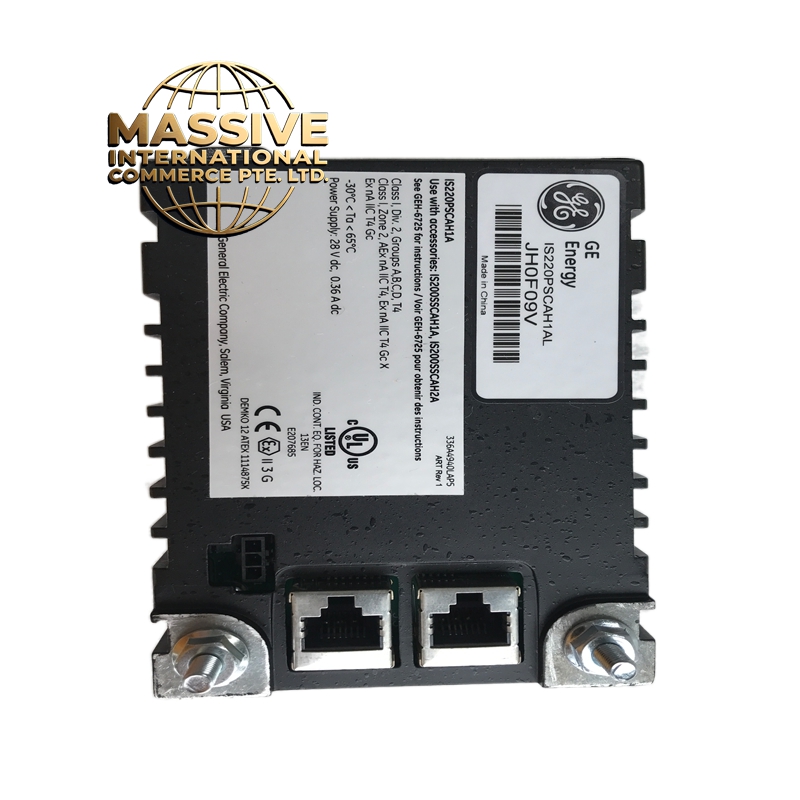
Description
GE IS220PSCAH1A Technical Specifications:
- System Compatibility: Mark VIe / Mark VIeS Control System.
- Communication Protocol: Serial Modbus RTU and Ethernet Modbus TCP/IP.
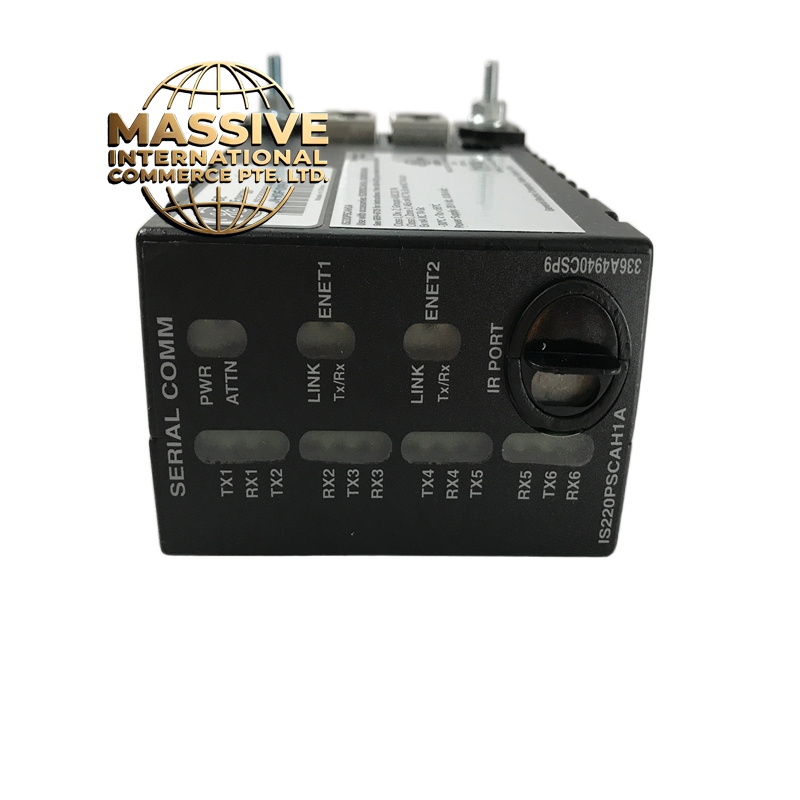
- Serial Channels: Six independently configurable serial transceiver channels.
- Supported Standards: RS-485 (half-duplex), RS-232, and RS-422.
- Network Interfaces: Dual RJ45 Ethernet ports for redundant network connectivity.
- Power Input: 3-pin power input connector.
- Operating System: QNX Real-Time Operating System.
Functional Features:
- Multi-Port Configuration: Each of the six serial ports can be individually configured for specific protocols, baud rates, and data formats.
- Modbus Master Services: Supports comprehensive Modbus RTU functions including configurable data bits (7 or 8), parity (even, odd, none), and 32-bit data word ordering.
- Advanced Diagnostics: Capable of executing self-diagnostic tests, monitoring analog inputs for configurable high/low limits, and generating specific alarm codes (e.g., 32-67, 114-119).
- Redundant Ethernet: The dual Ethernet ports support redundant network configurations to ensure uninterrupted communication.
Application Scenarios:
- Integration of auxiliary skids and third-party control panels.
- Communication with remote monitoring systems and SCADA networks.
- Data exchange in gas turbine and steam turbine power generation.
- Interface for balance of plant (BOP) equipment in petrochemical facilities.
Material Composition & Structural Characteristics:
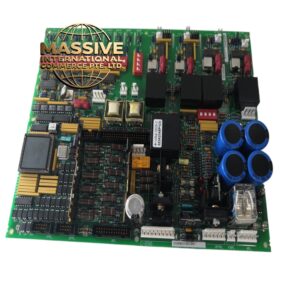
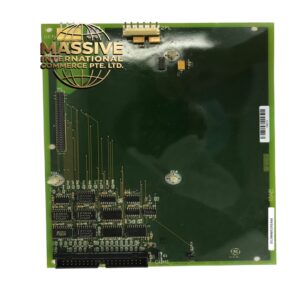
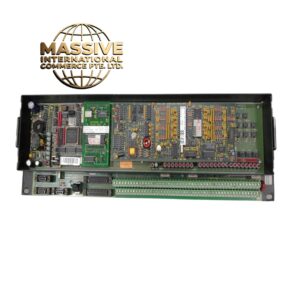
- Circuit Board: High-density industrial PCB with conformal coating for harsh environment protection.
- Connectors: Industrial-grade RJ45 Ethernet jacks and robust 3-pin power connectors.
- Status Indicators: Front-panel LEDs for power, status, and individual port activity monitoring.
- Form Factor: Compact I/O pack designed for DIN rail or panel mounting within the Mark VIe rack.
Working Principle: The board acts as a protocol gateway. It receives Modbus requests from the Mark VIe controller over the internal I/O bus, translates them into serial (RS-485/232/422) or Ethernet Modbus frames, and transmits them to external devices. Responses from external devices are received, validated, and routed back to the controller. The onboard processor manages the polling, data mapping, and error handling autonomously.
Installation Requirements:
- Wiring Standards: Use shielded twisted-pair cables for RS-485/422 connections to prevent electromagnetic interference.
- Termination: Properly terminate RS-485 networks at both ends to prevent signal reflections.
- Power Supply: Ensure a stable DC power supply is connected to the 3-pin power input.
- Software Configuration: Configure port parameters, station addresses, and Modbus mapping in the Mark VIe HMI software prior to commissioning.
Usage Precautions:
- Grounding: Ensure proper grounding of communication cables to prevent ground loops and signal degradation.
- Cable Separation: Route communication cables away from high-voltage power cables to minimize noise coupling.
- Alarm Monitoring: Monitor diagnostic alarms in the HMI to quickly identify communication faults or wiring issues.
- Hot-Swap: Verify system redundancy before replacing the module in a live system.