


Description
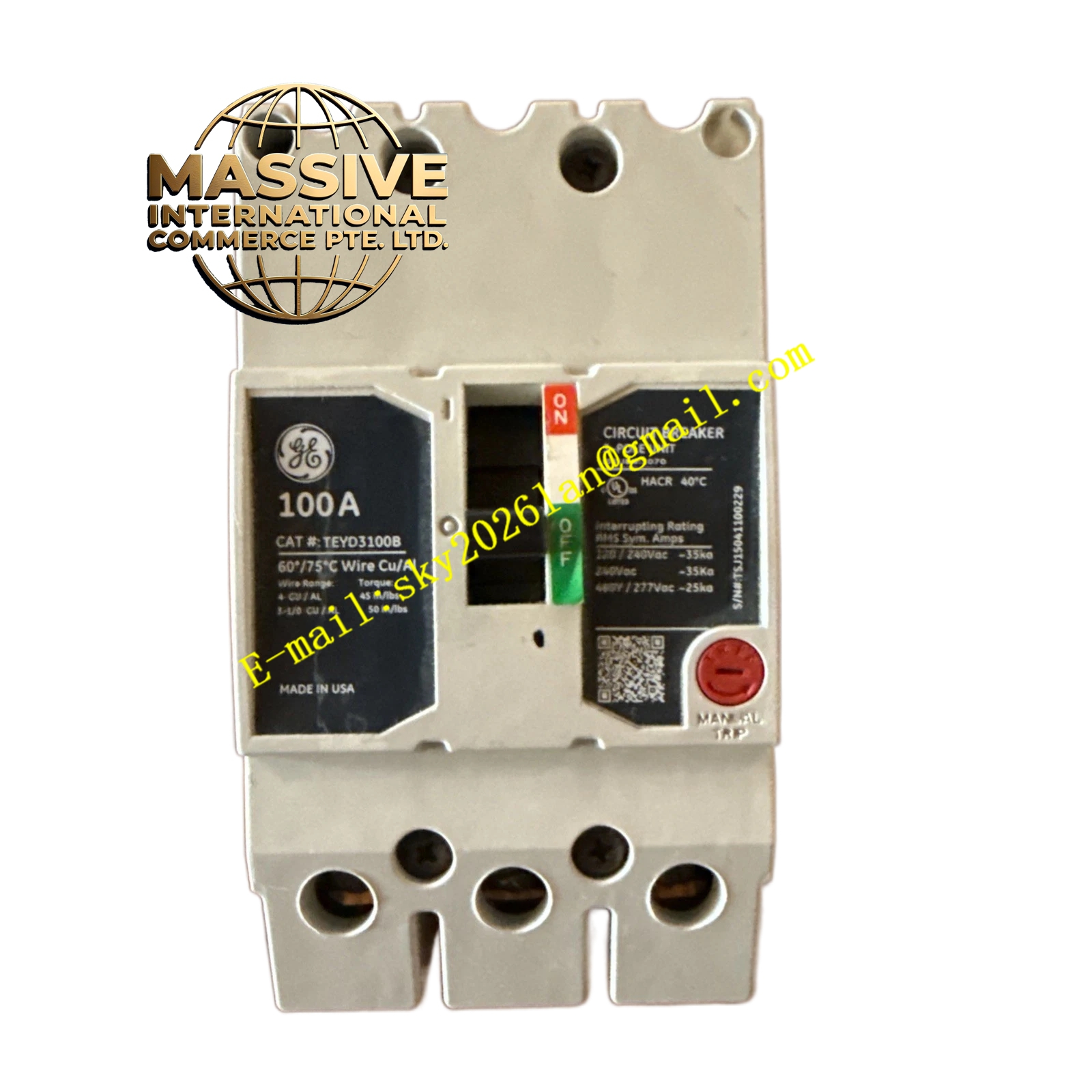
GE TEYL3100B
Technical Specifications
- Product Type: Handheld Fiber Optic Light Source
- Wavelength Options: Provides stable output for 1310nm and 1550nm dual-wavelength laser outputs.
- Fiber Compatibility: Supports both Single-Mode (SM) and Multi-Mode (MM) fiber cables.
- Interface Type: Standard FC/PC connector.
- Modulation Modes: CW (Continuous Wave), 2Hz, 270Hz, 1kHz, and 2kHz.
- Output Power: Typically -6dBm to -7dBm for 1310/1550nm wavelengths.
Functional Features
- User-Friendly Display: Features a large LCD screen to clearly display the current working wavelength and status.
- Flexible Operation: Equipped with a single-key switch for quick and convenient toggling between working wavelengths.
- Power Management: Includes an optional 10-minute auto-power-off function to conserve battery life, along with a low-voltage battery detection feature.
- Environmental Resilience: Designed to operate reliably in a wide temperature range of -10°C to +60°C.
Application Scenarios
Widely utilized in the fiber optic network industry for installation, operation, and maintenance tasks, including optical loss testing, fiber continuity verification, and network troubleshooting.
Performance Parameters
- Light Emitting Device: Utilizes FP-LD (Fabry-Pérot Laser Diode) technology for stable optical output.
- Optical Stability: Ensures consistent power output across varying operating temperatures to guarantee accurate test results.
Material Composition
Constructed with a rugged, industrial-grade plastic housing designed to withstand the physical demands of field use while protecting sensitive internal optical components.
Structural Characteristics
Features a compact, ergonomic handheld design that fits comfortably in the user’s hand, with a front-panel optical port and an intuitive control interface.
Working Principle
The device uses an internal laser diode driven by a precision current source to generate optical signals at specific wavelengths. These signals are coupled into the connected fiber optic cable, serving as a known reference light source for optical power meters to measure end-to-end signal loss.
Installation Requirements
No complex installation is required. The user simply needs to ensure the device has adequate battery power, clean the fiber optic connector, and securely mate the FC/PC connector to the fiber optic cable under test.
Usage Precautions
Never look directly into the optical port while the device is active, as the laser output can cause permanent eye damage. Always keep the optical port covered with a dust cap when not in use to prevent contamination of the connector interface.