


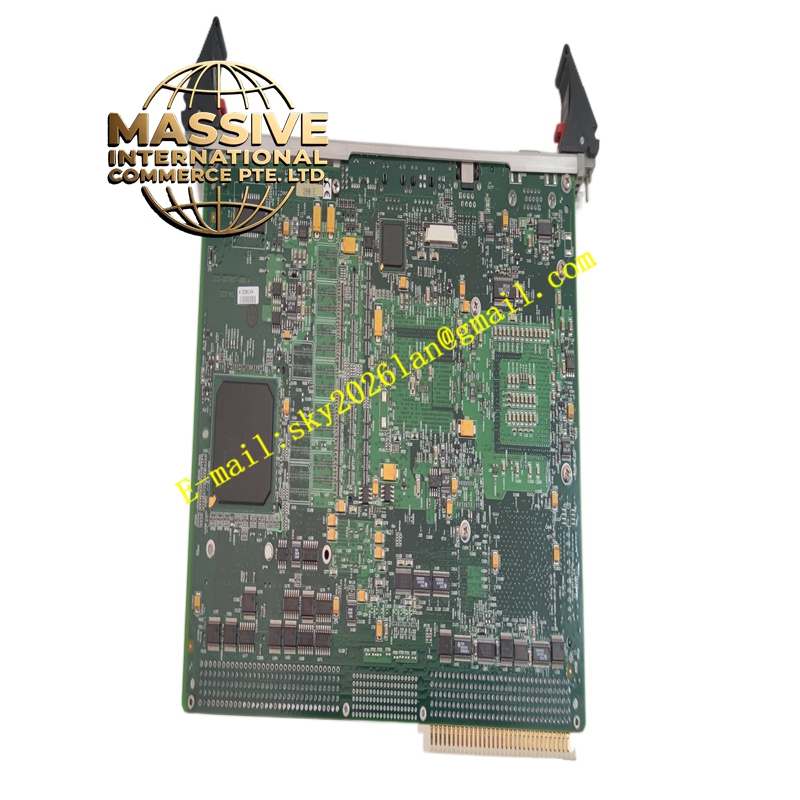
Description
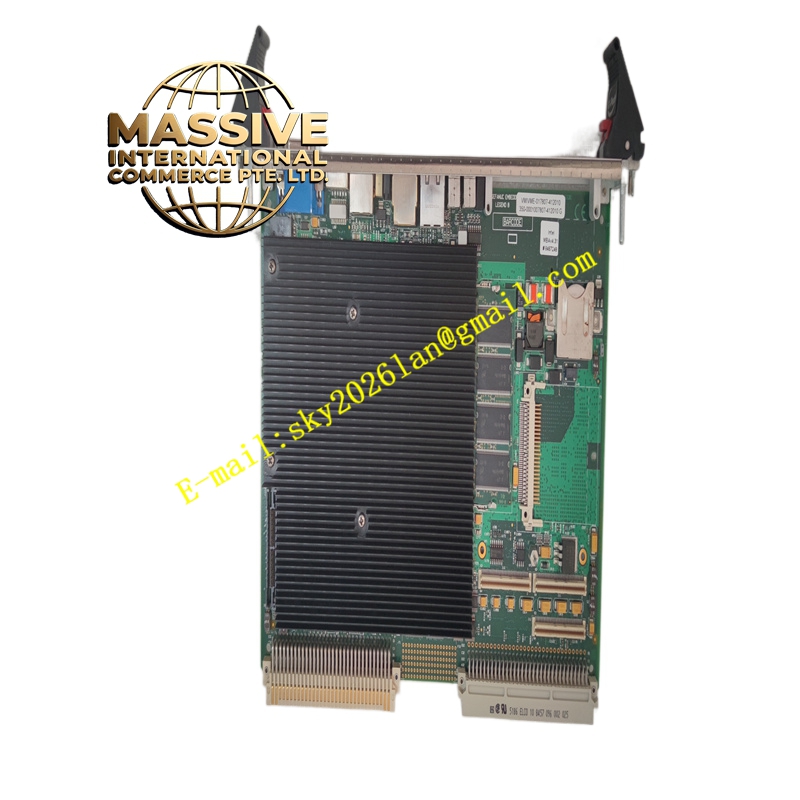
GE VMIVME-7807 Technical Specifications:
- Processor: Intel Pentium M processor available in 1.1 GHz, 1.4 GHz, or 1.8 GHz variants with up to 2 MB L2 cache.
- Memory: Up to 1.5 GB of DDR SDRAM with optional ECC support, utilizing a 400 MHz system bus.
- Storage: Supports up to 2 GB of bootable CompactFlash via the secondary IDE interface.
- Network: Dual Gigabit Ethernet ports (Intel 82546EB) plus one 10/100 Mbps management port.
- USB: Four USB 2.0 ports (two front panel, two rear I/O).
Functional Features:
- Advanced Chipset: Powered by the Intel 855GME chipset, providing enhanced hub architecture and integrated graphics.
- Dual Display Support: Features front-panel SVGA and rear-panel DVI-D connectors for dual-head display capabilities.
- PMC Expansion: Includes one PCI-X 66 MHz PMC site for adding MIL-STD-1553, FireWire, or custom FPGA mezzanines.
- VITA 31.1 Support: Optional P0 connector routing for dual Gigabit Ethernet to the backplane.
- Serial Communications: Four asynchronous 16550-compatible serial ports.
Application Scenarios:
- Upgrading legacy turbine control and radar pedestal systems without rewiring.
- High-bandwidth edge analytics and real-time data streaming.
- Military and aerospace defense applications.
- Industrial process control requiring modern OS support (VxWorks, QNX, Linux).
Performance Parameters:
- Thermal Efficiency: Operates within a 25W thermal envelope, making it ideal for conduction-cooled or low-airflow enclosures.
- Data Throughput: VME64x support with MBLT64 block transfer modes for maximum backplane bandwidth.
- Reliability: Rated for greater than 200,000 hours MTBF at 40°C.
Material Composition & Structural Characteristics:
- Cooling Design: Passive cooling utilizing advanced heat spreaders optimized for 450 LFM airflow.
- Rear I/O: Requires a VMIACC-0586 or VMIACC-0590 Rear Transition Module (RTM) for accessing rear P2 I/O.
- Build Quality: Rigid PCB construction to withstand high shock and vibration environments.
Working Principle: The Pentium M processor executes real-time control and data processing tasks while the 855GME chipset manages memory, PCIe lanes, and integrated graphics. The dual Gigabit Ethernet controllers handle high-speed network traffic, isolating control plane traffic from enterprise data networks. The VME interface bridges the modern PCI-X architecture to the legacy VME backplane, ensuring seamless integration with existing I/O modules.
Installation Requirements:
- Airflow: Ensure chassis airflow exceeds 450 LFM, particularly at the heatsink exhaust side.
- RTM Installation: Install the appropriate Rear Transition Module before inserting the SBC to access rear I/O ports.
- PMC Seating: Attach any PMC modules to the SBC before inserting the board into the VME chassis.
Usage Precautions:
- CMOS Battery: The board uses a battery-backed CMOS for configuration; replace the battery if BIOS settings fail to retain after prolonged power-off.
- CompactFlash: Ensure the CF card is properly seated and locked in the BIOS boot sequence if used as the primary storage device.
- Power Supply: Verify the VME chassis provides a stable +5V DC supply capable of delivering at least 12A for the 1.1 GHz variant.