


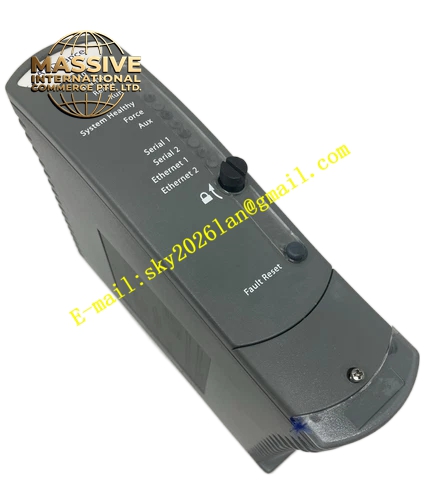
Description
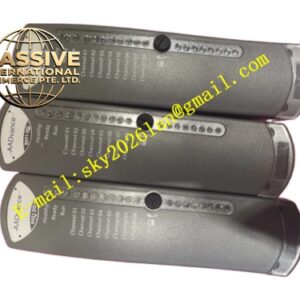
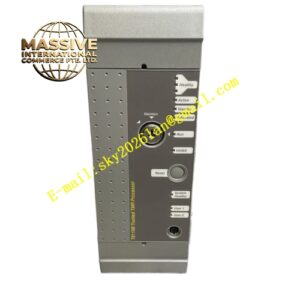
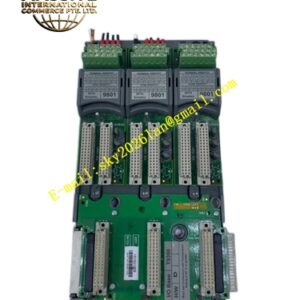
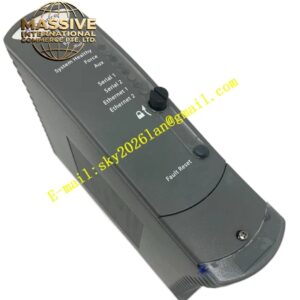
ICS Triplex 9110
Technical Specifications:
- Processor Architecture: Triple Modular Redundant (TMR) with 2oo3 hardware voting
- Main Processing Units: 3x 32-bit floating point execution cores
- Processor Type: PowerPC 604e or ARM Cortex-A9 (depending on revision)
- Clock Frequency: 400 MHz to 1 GHz
- Memory: 256 MB DDR2 SDRAM to 2 GB DDRII SDRAM
- Storage: 4 GB industrial Flash memory or 8 GB eMMC
- Safety Integrity Level: IEC 61508 SIL 3 Certified
- Inter-Module Bus Speed: Dual-redundant 25 Mbps media
- Sequence of Events Resolution: 1 ms hardware time-stamping
- Power Supply Input Range: 20 VDC to 32 VDC (dual redundant feeds)
- Power Consumption: 15W to 35W depending on configuration
- Operating Temperature: -30°C to +80°C or -25°C to +70°C
- Storage Temperature: -40°C to +85°C
- Relative Humidity: 5% to 95% non-condensing
- Electromagnetic Compatibility: EN 61000-6-2, EN 61000-6-4 industrial compliance
Functional Features:
- True triple modular redundancy architecture ensures any single CPU failure does not cause system shutdown
- Hardware voting mechanism continuously compares three processor outputs and isolates faulty channels automatically
- Advanced diagnostic functions execute comprehensive self-tests every 15 seconds
- Hot-swappable design enables module replacement without system interruption
- Dual 10/100 Mbps Ethernet ports for redundant network connectivity
- RS-232/422/485 serial interfaces for legacy device integration
- Sequence of Events (SOE) recording with 1 ms timestamp resolution
- Online firmware upgrade capability via front diagnostic port
- Configurable password protection for system interrogation
Application Scenarios:
- Emergency shutdown systems (ESD) in petrochemical facilities
- Burner management systems (BMS) in power plants
- Turbomachinery protection and control systems
- Pipeline safety monitoring and control
- Nuclear safety-related control functions
- Offshore drilling platform safety systems
Performance Parameters:
- Scan Cycle: Capable of completing complex safety logic within 50 ms
- Logic Processing: Handles 10,000+ safety logic steps per scan cycle
- Fault Response Time: Hardware-level fault detection and isolation within milliseconds
- Communication Latency: Sub-millisecond peer-to-peer data exchange
- Availability: 99.999% uptime capability through TMR architecture
Material Composition:
- PCB: High-temperature FR4 laminate with conformal coating
- Components: Industrial-grade semiconductors with extended temperature ratings
- Housing: Aluminum alloy with corrosion-resistant finish
- Connectors: Gold-plated contacts with high-insertion-cycle durability
Structural Characteristics:
- Three separate Fault Containment Regions (FCRs) with physical and electrical isolation
- Lock-step configuration ensuring synchronous operation of all three processors
- Front-panel LED indicators displaying module health, active status, and fault conditions
- Integrated heat sink design for thermal management
- Standard rack-mount form factor for chassis installation
Working Principle: The 9110 module operates on the principle of triple modular redundancy. Three independent processors execute identical application code simultaneously in a lock-step configuration. A hardware voter circuit compares the outputs from all three processors. If one processor deviates from the other two, the voter identifies the faulty channel, isolates it from the system, and continues operation using the remaining two healthy channels. This 2-out-of-3 voting mechanism ensures that no single point of failure can compromise system safety or availability.
Installation Requirements:
- Install only in approved AADvance system chassis with proper grounding
- Ensure dual redundant power supply connections are properly wired
- Maintain adequate ventilation to prevent thermal buildup
- Verify firmware compatibility with existing system modules before installation
- Configure system INI file parameters according to application requirements
- Establish proper network segmentation for Ethernet connections
Usage Precautions:
- Never remove the module while system power is active unless hot-swap procedure is followed
- Always wear anti-static wrist straps when handling the module
- Do not expose to condensation or moisture ingress
- Maintain firmware consistency across all redundant processors
- Regularly verify diagnostic logs for early fault detection
- Ensure backup of application programs before performing firmware updates