


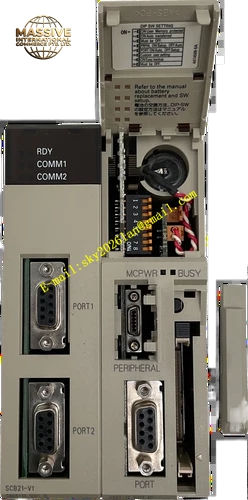
Description
OMRON CS1G‑CPU44H
Technical Specifications: User program capacity 30 K steps; maximum controllable I/O points 1280 points; DM data‑memory capacity 32 K words; basic‑instruction execution speed 0.1 μs; built‑in RS‑232C peripheral communication port; support up to 8 expansion I/O racks; power supplied from CS1‑series main‑rack backplane bus; operating temperature 0‑55°C; storage temperature ‑20‑75°C; operating humidity 10‑90%RH without condensation; lithium backup‑battery assembly for retentive‑data memory preservation; multi‑group LED indicators for RUN status, ERROR alarm and system status; rack‑slot installation; weight 400 g; CE and UL industrial compliance certifications.
Functional Features: Supports ladder‑diagram, structured‑text, function‑block and SFC programming languages; built‑in RS‑232C port for program upload‑download and host‑computer data communication; hardware self‑diagnosis identifies program errors, backplane‑bus faults and internal hardware failures; backup lithium battery preserves DM retentive‑data memory during main‑power loss; fault‑code storage mechanism facilitates on‑site troubleshooting; full compatibility with complete range of CS1‑series I/O and special‑function expansion modules.
Application Scenarios: Medium‑and‑large‑scale automated‑machinery control systems; automobile production‑line automation control; packaging‑equipment large‑scale control; material‑conveying‑line automation; machine‑tool auxiliary‑control systems; spare‑part replacement for legacy CS1‑series automation installations.
Performance Parameters: Conforms to IEC industrial‑electromagnetic‑compatibility standards; vibration‑resistance and shock‑resistance meet cabinet‑mount‑equipment grade requirements; support continuous 24‑hour operation inside industrial control cabinets.
Material Composition: Black V0 flame‑retardant engineering‑plastic housing; internal FR‑4 multilayer glass‑fiber printed‑circuit board; gold‑plated backplane edge‑connector contacts; lithium backup‑battery assembly; industrial main‑control processing chip; high‑brightness multi‑color LED status indicators.
Structural Features: CS1‑series rack‑slot mechanical profile; gold‑plated edge‑connector on rear housing surface interfaces with CS1‑series main‑rack backplane bus; front‑panel RS‑232C 9‑pin peripheral communication port; multiple groups of RUN‑ERROR status LED indicators arranged on front‑panel surface; side locking latches fasten CPU unit into designated CPU slot of CS1‑series main rack.
Working Principle: CS1G‑CPU44H executes cyclic scan cycles: reads all input‑module signal states from main‑rack and expansion‑rack backplane bus; sequentially executes user‑written control program; refreshes output‑module state data onto backplane bus. RS‑232C peripheral port handles program upload‑download and host‑computer data‑exchange tasks. Internal self‑diagnosis circuit continuously monitors hardware operating state, illuminates alarm‑indicator and stores fault‑code information when abnormal events occur. Backup lithium battery maintains DM retentive‑memory content upon main‑supply power failure.
Installation Requirements: Install CS1G‑CPU44H into designated CPU slot of CS1‑series main rack; fasten CS1‑series main rack onto cabinet DIN rail; reserve adequate heat‑dissipation clearance surrounding CPU‑module housing; deploy shielded cable for RS‑232C peripheral‑port communication wiring; physically separate communication‑signal cables from high‑power dynamic cables; implement reliable protective grounding for control cabinet.
Usage Notes: Hot‑swap operation for this CPU unit is strictly prohibited; replace backup lithium battery according to specified service cycle to avoid loss of retentive memory data; complete full user‑program backup after programming work; read CPU stored fault‑codes for equipment‑failure‑analysis work; do not deploy in environments with corrosive gas or condensation.